
Root Canal Treatment Cost in Mumbai (2026): Front Tooth vs Molar

Reviewed by Dr. Sailee Kalyankar
Last updated: July 12, 2026
Table of Contents
How Much Does Root Canal Treatment Cost in Mumbai (2026)?
In 2026, root canal treatment in Mumbai costs between ₹3,000 and ₹15,000 per tooth. Front teeth are cheapest (single canal, faster), while molars cost the most because they have multiple canals and are more complex to treat. A protective crown after the procedure adds ₹3,000–₹18,000 depending on the material, bringing the combined root-canal-plus-crown total to roughly ₹8,000–₹25,000. However, the cost depends on several factors, including which tooth needs treatment, the number of root canals, the severity of the infection, the technology used, whether the procedure is performed by a general dentist or an endodontist, and whether a dental crown is required after treatment.
For example, treating a front tooth is generally less complex than treating a molar because front teeth usually have a single canal, while molars may have three or four canals that require careful cleaning and sealing.
In this article, we’ll explain the average root canal treatment cost in Mumbai, compare front tooth and molar treatment, discuss what may or may not be included in the fee, and answer the most common questions patients ask before starting treatment.
How much does a root canal cost per tooth in Mumbai?
| Tooth type | Number of canals | Typical cost |
|---|---|---|
| Front tooth (incisor / canine) | 1 | ₹3,000 – ₹6,000 |
| Premolar | 1–2 | ₹5,000 – ₹8,000 |
| Molar | 3–4 | ₹8,000 – ₹15,000 |
THe cost of root canal per tooth depnds on several factors like tooth type, number of canals. Molars sit at the top of the range because more canals mean more time, more precision, and often a dental microscope or a specialist endodontist — all of which raise the cost but also improve success rates.
What does the root canal price include — and what's extra?
A front tooth usually has a single, straight canal that can be cleaned and sealed relatively quickly. A molar can have three or four narrow, curved canals, each of which must be located, disinfected, and filled. That complexity is the single biggest reason molar root canals cost two to three times more than front-tooth treatment.
What does the root canal price include — and what's extra?
The base treatment fee typically covers cleaning, disinfecting, and sealing the canals. Budget separately for:
- Crown / cap — Dental Crown Treatment is strongly recommended after a root canal, since the treated tooth becomes brittle. Metal-ceramic crowns run ₹3,000–₹8,000; zirconia crowns ₹8,000–₹18,000.
- Post and core — a small internal support placed when the tooth is badly broken down. Around ₹1,000–₹3,000.
- Diagnostics — X-rays or, for complex cases, a CBCT scan.
Combined root canal + crown therefore usually totals ₹8,000–₹25,000+, depending on the tooth and the crown you choose.
What are the Factors That Affect Root Canal Treatment Cost in Mumbai
No two root canal treatments are exactly the same. While patients often compare prices online, the final cost depends on several clinical and technical factors unique to each case.
1. Which Tooth Needs Treatment?
Front Teeth
Front teeth (incisors and canines) generally:
- Have one root canal
- Are easier to access
- Take less clinical time
- Require fewer instruments
As a result, they are usually less expensive to treat.
Premolars
Premolars often contain one or two canals.
Treatment is moderately complex and may require additional cleaning compared to front teeth.
Molars
Molars usually have:
- Three or four canals
- Curved canals
- Narrow canals
- Difficult access
Cleaning every canal thoroughly requires greater expertise, additional instruments, and more chair time.
This is why molar root canal treatment generally costs more.
2. Severity of Infection
A tooth with mild pulp inflammation is often simpler to treat than one with extensive infection.
Factors that increase treatment complexity include:
- Large dental abscess
- Swelling
- Multiple infected canals
- Bone infection
- Previous untreated infection
Advanced infections may require:
- Multiple visits
- Additional medication
- Extra cleaning procedures
3. Initial Root Canal vs Root Canal Retreatment
A first-time root canal is generally more straightforward.
However, retreatment involves removing old filling material, locating untreated canals, correcting previous procedural issues, and disinfecting the tooth again.
Retreatment is usually more time-consuming and technically demanding.
4. Technology Used During Treatment
Modern dental technology improves diagnosis, precision, and patient comfort.
Some clinics may use:
- Digital X-rays
- RVG imaging
- CBCT scans (when clinically indicated)
- Rotary endodontic systems
- Electronic apex locators
- Magnification loupes or dental microscopes
These technologies may influence treatment costs but can also enhance treatment planning and accuracy.
5. Dentist's Experience
The complexity of root canal treatment means experience matters.
Treatment performed by a dentist with additional training in endodontics or extensive restorative experience may differ in cost due to:
- Advanced clinical expertise
- More predictable treatment planning
- Management of complex canal anatomy
- Higher success rates in challenging cases
Choosing a dentist should involve more than comparing prices.
6. Single Sitting vs Multiple Sitting Root Canal
Many patients ask:
“Is a single sitting root canal cheaper?”
The answer depends on the condition of the tooth.
Did You Know? The chances of successfully saving a knocked-out permanent tooth are generally highest when treatment begins within the first hour after the injury.
Does Root Canal Cost Include the Dental Crown?
No. Root Canal Cost does not include the Dental Crown treatment
Many patients assume that the quoted root canal fee includes the permanent crown.
In reality, treatment charges may be divided into:
- Consultation
- Diagnostic X-rays
- Root canal procedure
- Core build-up (if needed)
- Permanent crown
- Follow-up review
Always ask for a detailed treatment estimate before beginning treatment.
Why Is a Crown Often Recommended After Root Canal Treatment?
Root canal treatment removes infected tissue inside the tooth but does not strengthen weakened tooth structure.
Teeth that have undergone root canal treatment—especially molars—may become more brittle over time.
A dental crown helps by:
- Protecting the remaining tooth structure
- Restoring chewing efficiency
- Reducing fracture risk
- Improving long-term durability
According to the American Association of Endodontists (AAE), restoring a root canal-treated tooth appropriately is an important step in protecting it from future damage.
Is a root canal cheaper than removing the tooth?
Extraction is cheaper on the day, but rarely the more economical choice long term. A missing tooth usually needs to be replaced with a bridge or implant — and an implant alone costs ₹25,000–₹70,000. Saving your natural tooth with a root canal and crown almost always costs less over time and preserves your natural bite.
Modern root canals are performed under local anaesthesia, so the procedure itself is broadly comparable to getting a filling. Most of the pain patients associate with root canals actually comes from the infection before treatment — which the procedure relieves.
Front Tooth vs Molar Root Canal: What's the Difference?
Many patients are surprised to learn that not all root canal treatments are the same. The complexity of the procedure depends largely on the type of tooth being treated.
| Feature | Front Tooth | Molar Tooth |
|---|---|---|
| Number of Canals | Usually 1 | Usually 3–4 |
| Procedure Complexity | Lower | Higher |
| Average Treatment Time | Shorter | Longer |
| Instrumentation Required | Less Complex | More Complex |
| Difficulty of Cleaning | Easier | More Challenging |
| Cost Range | Generally Lower | Generally Higher |
| Crown Requirement | Sometimes | Frequently Recommended |
Because molars play a major role in chewing and are subjected to higher biting forces, dentists often recommend placing a dental crown after root canal treatment to improve long-term durability.
Why Does a Molar Root Canal Usually Cost More?
A common misconception is that dentists charge more simply because a molar is located at the back of the mouth. In reality, the higher cost reflects the additional time, expertise, and resources often required to treat these teeth.
1. More Root Canals
Front teeth usually have one canal, whereas molars commonly have three or four canals. Each canal must be located, cleaned, disinfected, shaped, and sealed carefully to reduce the risk of persistent infection.
2. Greater Technical Complexity
Molars are located at the back of the mouth, where visibility and access are more limited. Curved or narrow canals may require advanced instrumentation and greater clinical precision.
3. Longer Chair Time
Treating multiple canals typically requires more time than treating a single-canal tooth, especially in cases involving infection or calcified canals.
4. Additional Restoration
Because molars absorb significant chewing forces, they often require a dental crown after root canal treatment to reduce the risk of fracture.
Common Mistakes Patients Make When Comparing Root Canal Costs
- Choosing the lowest price without understanding what is included.
- Assuming every root canal procedure is the same.
- Ignoring the need for a crown after treatment.
- Delaying treatment to avoid costs, allowing the infection to worsen.
- Not asking whether additional procedures may be required.
- Comparing treatment fees without considering the dentist's expertise and technology available.
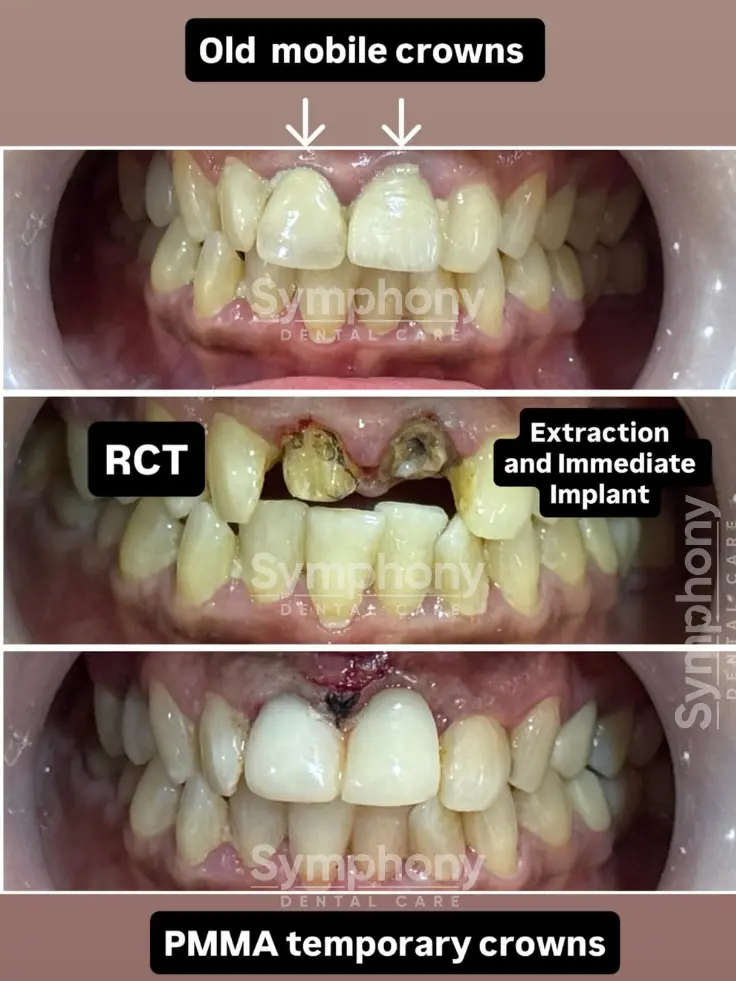
Before/After results of Root Canal Treatment
Expert Insights
Patients often compare treatment fees without considering the complexity of their individual case. A molar with four curved canals naturally requires more time and precision than a front tooth with a single canal. During every consultation at Symphony Dental Care, we explain why treatment recommendations and costs vary so patients can make informed decisions based on their oral health—not just the initial fee.

Dr. Sailee Kalyankar
BDS, MDS | Conservative Dentist and Microscopic Endodontist. Khar West | Bandra West.
Registration Number A- 35825
Why Patients Choose Symphony Dental Care for Root Canal Treatment
When patients are considering root canal treatment, they often look beyond cost—they want confidence in the quality of care they receive.
At Symphony Dental Care, Bandra West, every treatment plan begins with a comprehensive clinical assessment. Dr. Sailee Kalyankar and the dental team evaluate the condition of the affected tooth, discuss all suitable treatment options, and explain the factors that influence treatment costs.
- Digital diagnostic imaging when clinically indicated
- Personalised treatment planning
- Clear explanation of procedures and expected outcomes
- Transparent discussion of treatment fees
- Comprehensive restorative care, including dental crowns where appropriate
- Follow-up guidance to support long-term oral health
Patients from Bandra West, Khar West, Mahim, Bandra East, Santacruz, Vile Parle and nearby neighbourhoods often seek root canal treatment at Symphony Dental Care when they experience sudden tooth pain, broken teeth, or dental injuries.
Frequently Asked Questions (FAQs)
Between ₹3,000 and ₹15,000 per tooth — front teeth at the lower end, molars at the higher end — before the cost of a crown.
Molar root canals typically cost ₹8,000–₹15,000, and can exceed ₹15,000 when a dental microscope or specialist endodontist is involved.
In most cases, yes. A treated tooth becomes brittle, and a crown protects it from fracture. A crown adds roughly ₹3,000–₹18,000 depending on the material.
Many root canals are completed in a single sitting; more complex or infected cases may require two or more visits.
No. It is done under local anaesthesia and is comparable to a filling. The procedure relieves the pain caused by the underlying infection.
When a tooth can be restored, preserving the natural tooth is generally preferred. Root canal treatment maintains natural chewing function, helps preserve jawbone and surrounding teeth, and avoids the need for replacement options such as implants or bridges. However, the appropriate treatment depends on the individual clinical condition.
A front tooth may often be completed more quickly than a molar due to its simpler anatomy. More complex teeth with multiple canals or extensive infection generally require additional treatment time.
Not every root canal-treated tooth requires a crown, but many back teeth benefit from one because they are exposed to greater chewing forces. Without appropriate restoration, a weakened tooth may become more susceptible to fracture. Your dentist will recommend the most suitable restoration based on the amount of remaining tooth structure.
Coverage depends on your insurance policy. Some dental insurance plans reimburse part of the treatment cost, while others have waiting periods, exclusions, or annual limits. Patients should check directly with their insurer for details of their specific plan.
Patients should wait until the local anaesthetic has worn off before eating to reduce the risk of biting the cheek or tongue. Soft foods are generally recommended initially, and chewing on the treated side should be avoided until the tooth has been permanently restored if advised by the dentist.
When combined with appropriate restoration and good oral hygiene, many root canal-treated teeth function successfully for many years. Regular dental check-ups and maintaining oral health are important for long-term success.
Conclusion
A broken tooth or sudden tooth pain should never be ignored. While some dental concerns can wait for a routine appointment, symptoms such as severe pain, swelling, bleeding, or trauma often require prompt professional attention.
Knowing how to respond during a dental emergency can help protect your teeth, relieve discomfort, and reduce the risk of long-term complications. If you experience any warning signs discussed in this guide, arrange an evaluation with an experienced emergency dentist as soon as possible.
Timely care not only addresses the immediate problem but also helps preserve your smile and overall oral health.
Need Root Canal Specialist? We’re Here to Help