

Is Chewing Gum Good for Your Teeth? Benefits, Risks and Dentist Advice

Reviewed by Dr. Sailee Kalyankar
Last updated: September 28, 2026
Table of Contents
Yes, but only if the gum is sugar-free. Sugar-free gum chewed for about 20 minutes after meals increases saliva, which washes away food particles and neutralizes acid. Sugary gum does the opposite and feeds cavity-causing bacteria. Gum never replaces brushing and flossing.
Many patients ask me the same thing: is chewing gum good for your teeth, or is it just a sweet habit that leads to cavities? The honest answer depends on the type of gum, when you chew it, and how long.
This guide is written by Dr. Sailee Kalyankar, BDS, MDS, at Symphony Dental Care. It explains the real benefits of chewing gum, the side effects, and how to choose a gum that protects your smile.
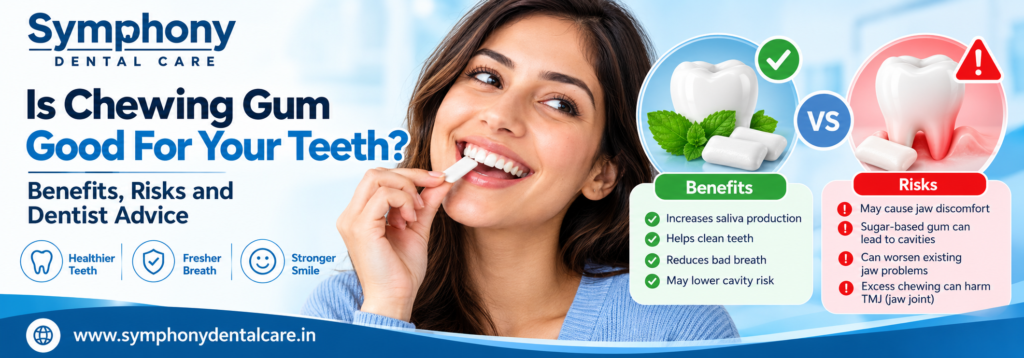
Is Chewing Gum Good for Your Teeth? What a Dentist Says
In Dr. Sailee’s 10+ years of clinical practice as a conservative dentist and endodontist, She has seen both sides. Patients who chew sugar-free gum after meals often have cleaner mouths. Patients who chew sugary gum all day often show new cavities near the gumline.
So the question is gum good for your teeth has a two-part answer:
- Sugar-free gum: helpful as a small extra step.
- Sugary gum: harmful, especially when chewed often.
Chewing stimulates your salivary glands. Saliva is your mouth’s natural defense. It rinses away debris, buffers acid, and delivers calcium and phosphate back to enamel.
Benefits of Chewing Gum for Your Teeth and Gums
Here are the main advantages of chewing gum when you pick the right kind.
1. It Boosts Saliva Flow
More saliva means faster acid neutralization after you eat or drink. This is the main reason dental research supports the benefits of chewing gum. It also helps people with dry mouth, which raises cavity risk.
2. It Helps Clear Food Particles
Chewing helps loosen leftover food from the chewing surfaces of your teeth. This is useful when you cannot brush right away, such as after a work lunch or during travel.
It does not remove plaque from between teeth or along the gums. Only brushing, flossing and professional teeth cleaning and polishing do that thoroughly.
3. Xylitol Gum Fights Cavity Bacteria
Xylitol is a sugar substitute that cavity-causing bacteria cannot use as fuel. Studies suggest that regular xylitol use can reduce the level of these bacteria in the mouth. If you want chewing gum good for your teeth, look for xylitol on the label.
4. Some Gums Support Enamel
Certain gums contain calcium and phosphate compounds such as CPP-ACP. These may help remineralize early enamel weakness. They add a modest benefit on top of good brushing, not a cure for cavities.
5. It Works as a Mouth Freshener
A mouth freshener chewing gum gives quick relief from odor. The flavor masks bad breath for a short time, and the extra saliva reduces odor-causing bacteria.
Be careful with this one. If your breath stays unpleasant for days, gum is only covering a problem. Persistent bad breath often points to plaque, gum disease, a cavity or a tongue coating, and you should have it checked.
Is Bubble Gum Good for Health?
Not usually. Patients often ask, ” Is bubble gum good for health?” or Is Boomer chewing gum good for your health? Classic bubble gum, including many popular brands like Boomer, contains sugar. Always read the ingredient label on your specific pack.
Here is why sugary bubble gum is a problem:
- Sugar stays in contact with your teeth for as long as you chew.
- Bacteria turn that sugar into acid, which weakens enamel.
- Children chew it often, and their enamel is thinner and more vulnerable.
So the benefits of bubble gum are mostly fun and habit, not oral health. If your child loves gum, choose a sugar-free version and keep it to a few minutes after meals. Our pediatric dentistry team can also guide parents on cavity prevention and fluoride care for children.
Chewing Gum Benefits and Side Effects
Is eating chewing gum good or bad? It depends on the gum and the habit. Here is the full picture of chewing gum benefits and side effects.
Benefits
- More saliva and faster acid neutralization
- Less dry mouth
- Short-term fresh breath
- Less snacking for some people
- Xylitol support against cavity bacteria
Side effects and risks
- Sugar damage: sugary gum raises cavity risk.
- Jaw strain: long hours of chewing can tire the jaw muscles and worsen jaw joint (TMJ) pain, clicking or headaches.
- Digestive upset: sugar alcohols like sorbitol can cause gas or loose stools when eaten in large amounts.
- Damage to dental work: sticky gum can loosen temporary crowns, fillings or braces attachments.
- False security: some people skip brushing because they chewed gum. That is a mistake.
- Swallowing: children should never swallow gum. Teach them to spit it out.
If you clench or grind your teeth, or you already have jaw pain, avoid regular gum chewing.
Is Chewing Gum Good for Health Overall?
Is chewing gum good for health beyond teeth? Some people find it helps with focus, stress or cravings. These effects are small and vary by person. From a dental view, the useful part is saliva. The rest is a bonus.
Think of gum as a small support tool. It is not a treatment.
How to Choose the Best Gum for Your Teeth
Use this simple checklist when you shop:
- Sugar-free: check that “sugar” is not in the first few ingredients.
- Xylitol: look for xylitol or a similar cavity-friendly sweetener.
- Recognized quality marks: choose trusted brands that clearly list their ingredients.
- Mild flavor: very acidic or sour flavors can irritate enamel.
- Non-sticky texture: this matters if you have crowns, bridges or braces.
How to Chew Gum the Right Way
Follow these dentist-approved habits:
- Chew for about 20 minutes after meals or snacks.
- Choose sugar-free gum every time.
- Do not chew all day. Give your jaw rest.
- Use gum after brushing and flossing, never instead of them.
- Throw gum away in a bin, not on the ground.
When Chewing Gum Is Not Enough
Gum cannot repair a cavity, remove tartar or treat gum disease. See a dentist if you notice:
- Tooth sensitivity to hot, cold or sweet foods
- Bleeding or swollen gums
- Bad breath that will not go away
- A dark spot or hole in a tooth
- Jaw pain that gets worse with chewing
At Symphony Dental Care in Bandra West, we start with a careful diagnosis and aim to save your natural tooth whenever possible. Early care is simpler, less costly and more comfortable.
According to Dr. Sailee Kalyankar Zirconia implants offer a metal-free option for selected patients. Proper diagnosis, precise placement, healthy gums, and regular maintenance are key to long-term success

Dr. Sailee Kalyankar
BDS, MDS | Conservative Dentist and Microscopic Endodontist. Khar West | Bandra West.
Registration Number A- 35825
Frequently Asked Questions (FAQs)
Regular bubble gum contains sugar and can increase cavity risk. Sugar-free bubble gum is a safer option.
The main benefits are more saliva, less dry mouth, cleaner tooth surfaces after meals and temporary fresh breath.
Most dentists recommend a professional cleaning every 6 months, though patients prone to tartar buildup may need it more frequently.
Sticky gum can loosen braces or temporary restorations. Ask your dentist before chewing.
Classic bubble gums like Boomer are generally sugar-based, so they are not ideal for teeth. Check the label and limit use.
It helps neutralize acid, supports enamel, freshens breath and can reduce snacking.
About 20 minutes is enough for most people.
No. Gum helps rinse the mouth but cannot remove plaque properly. Brush twice daily and floss once daily.
Conclusion
So, is chewing gum good for your teeth? Yes, when it is sugar-free, chewed briefly after meals and paired with proper brushing, flossing and dental visits. Sugary gum and constant chewing do more harm than good.
For personal advice, meet Dr. Sailee Kalyankar for a check-up and a plan that fits your mouth. You can also contact our clinic to book a visit, or explore more oral care guidance on the Symphony Dental Care website.
Thinking About Root Canal or Extraction?