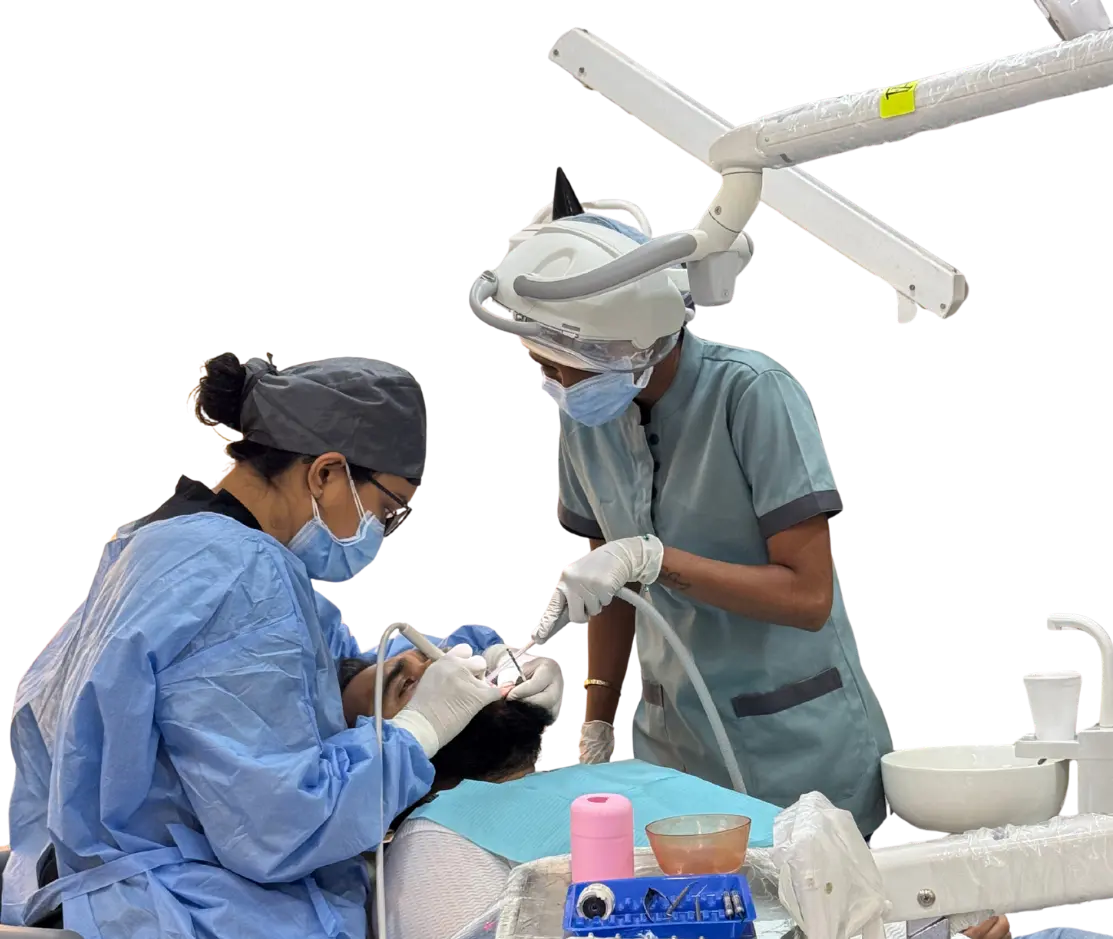

Orthodontic Treatment for Adults | Advanced Smile Correction
Reviewed by Dr. Sailee Kalyankar
Last updated: October 30, 2026
Table of Contents
Crooked teeth, gaps, or an uneven bite can affect more than the appearance of a smile. Adults may also wonder whether braces will fit their professional and personal routines. The good news is that orthodontic treatment is not limited to teenagers. Depending on the condition of the teeth, gums, and jaw, adults may be suitable for fixed braces or clear aligners. Understanding the available options, treatment process, and expected outcomes can help you make an informed decision with a qualified dental professional.
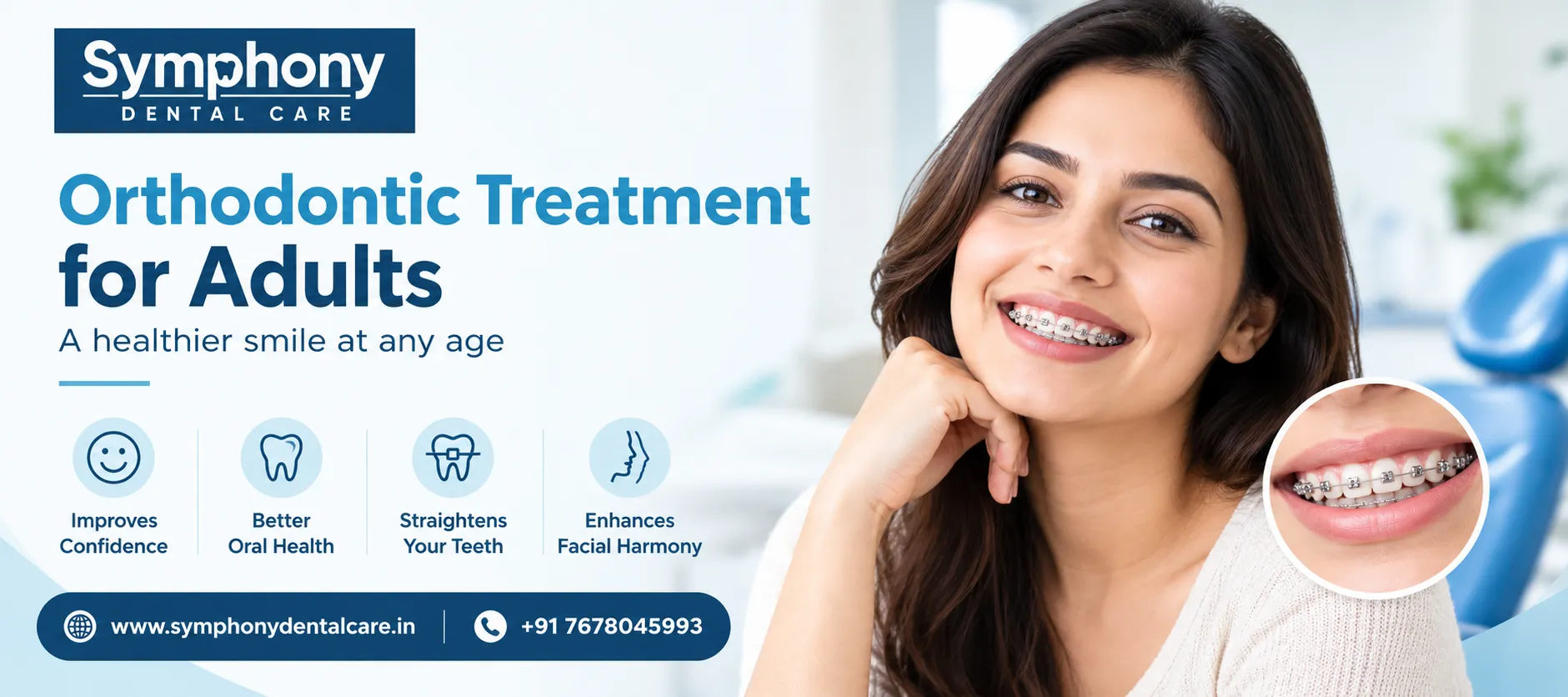
What Is Orthodontic Treatment for Adults?
Orthodontic treatment uses carefully planned forces to move teeth into healthier positions and improve how the upper and lower teeth meet. For adults, treatment may address crowded teeth, gaps, rotated teeth, certain bite problems and teeth that have shifted over time.
The goal is not simply to create a straighter-looking smile. Appropriate alignment may also make some areas easier to clean and improve bite function. However, orthodontic treatment does not replace routine dental care, and not every concern can be corrected with braces or aligners alone.
Types of Orthodontic Treatment for Adults
1. Fixed Orthodontic Treatment
Fixed orthodontic treatment uses brackets attached to the teeth and a wire that applies controlled pressure. The orthodontist adjusts the appliance during scheduled appointments.
Common options include:
- Metal braces: A well-established option for many alignment and bite problems.
- Ceramic braces: Tooth-coloured brackets that may be less noticeable than metal brackets.
- Other specialist appliances: These may be recommended according to the type of tooth movement required.
Fixed braces can provide precise control over tooth movement. However, patients need to clean carefully around brackets and wires and follow instructions about foods that could damage the appliance.
2. Clear Aligners
Clear aligners are removable, custom-made trays designed to move teeth gradually according to a treatment plan. They may suit adults who prefer a less noticeable option and whose orthodontic needs can be managed with aligners.
Patients generally need to wear aligners for most of the day, following their orthodontist’s instructions. They should be removed for meals and drinks other than plain water, and teeth should be cleaned before the aligners are reinserted.
Consistent wear is important. Some complex tooth movements or bite problems may be better managed with fixed braces or a combined approach.
For more information, explore Invisalign Aligners Treatment in Bandra West Mumbai.
3. Combined Orthodontic and Smile-Design Planning
Some treatment plans coordinate orthodontic correction with other dental procedures. For example, tooth alignment may be considered before or alongside selected restorative or cosmetic treatments.
The order of treatment should be determined by clinical findings, not appearance alone.
Read more about smile design and treatment planning.
Fixed Braces vs Clear Aligners: Which Option Should Adults Consider?
Neither option is universally better. The right choice depends on the diagnosis, required tooth movements, lifestyle and ability to follow treatment instructions.
Factor | Fixed braces | Clear aligners |
Appearance | Metal brackets are visible; ceramic options may be less noticeable | Usually less noticeable |
Removability | Remain attached during treatment | Removable for meals and cleaning |
Oral hygiene | Requires careful cleaning around brackets | Requires cleaning teeth before reinserting trays |
Compliance | Appliance stays in place | Requires consistent wear |
Suitability | Can manage many types of tooth movement | Depends on the complexity of the case |
Discuss comfort, maintenance, appointment frequency, likely duration and limitations with your orthodontist before choosing.
What Happens During Adult Orthodontic Treatment?
Step 1: Consultation and Assessment
The orthodontist reviews your dental history, concerns, and treatment goals. An examination may include photographs, digital scans or impressions, and X-rays when clinically indicated.
Step 2: Personalised Treatment Planning
Your orthodontist will explain the recommended treatment, alternatives, expected duration, potential risks, and costs. Ask which changes are realistic for your particular case.
Step 3: Appliance Placement
For fixed braces, brackets and wires are fitted. For aligners, custom trays are provided along with instructions for wearing, removing and cleaning them.
Step 4: Regular Follow-Up Visits
Review appointments help the orthodontist monitor progress and make adjustments or provide subsequent aligners. Contact the clinic if an appliance breaks, a tray no longer fits, or discomfort becomes severe or persistent.
Step 5: Retention
After active treatment, retainers help maintain the new tooth positions. Teeth can shift again over time, so following the prescribed retainer schedule is essential.
Is Adult Orthodontic Treatment Safe?
Orthodontic treatment is commonly used to correct dental alignment, but it has limitations and potential risks. These may include temporary soreness, irritation, difficulty cleaning, gum problems, root shortening in some cases, and relapse after treatment.
Existing gum disease and poor oral hygiene can increase the risk of complications. A qualified dental professional should assess your oral health, explain the benefits and risks, and monitor progress throughout treatment.
Do not begin treatment based only on an online simulation or product advertisement. This article is for educational purposes and does not replace an individual dental examination.
Conclusion
Orthodontic treatment for adults can address crowding, spacing and selected bite problems through fixed braces, clear aligners or a personalised combination. The most suitable approach depends on oral health and the movements required, not simply on age or appearance.
Dr. Sailee Kalyankar
BDS, MDS | Conservative Dentist and Microscopic Endodontist. Khar West | Bandra West.
Registration Number A- 35825
Frequently Asked Questions
There is no single upper age limit. Suitability depends on gum health, bone support, oral health, and the type of correction required rather than age alone.
Not for everyone. Fixed braces may be appropriate for a wider range of tooth movements, while clear aligners can suit selected cases. An orthodontist can recommend an option based on your diagnosis.
Some pressure, tenderness or mild discomfort can occur after braces are fitted, adjusted or a new aligner is started. Severe, worsening or persistent pain should be discussed with your treating clinician.
Possibly. Existing restorations do not automatically rule out treatment, but they can influence appliance selection and treatment planning. Your orthodontist should review them before recommending an approach.
Teeth can shift after active treatment. Retainers help maintain alignment, and wearing them as instructed is important for long-term stability.
No. Some bite problems can be managed with orthodontics alone, while others may require a combined treatment plan or specialist assessment.
A clinical examination and appropriate diagnostic records are needed. Your orthodontist can explain which options are suitable for your tooth alignment and bite.