

Dental Implants Before and After Treatment

Reviewed by Dr. Sailee Kalyankar
Last updated: March 31, 2026
Table of Contents
Losing a tooth is more than just a dental problem it affects how you smile, how you eat, and honestly, how you feel about yourself every single day.
If you’ve been Googling dentist near me or searching for dental implants in Bandra West, chances are you’re already thinking seriously about fixing your smile. And dental implants are one of the best decisions you can make for your long-term oral health.
At Symphony Dental Care in Bandra West, Mumbai, Dr. Sailee Kalyankar and her team work with patients every day who walk in feeling self-conscious about missing or damaged teeth and walk out with smiles they’re genuinely proud of. In this guide, we’ll take you through the entire dental implant journey: what things look like before treatment, what happens during the process, and the beautiful transformation that comes after.
What are Dental Implants?
A lot of people imagine dental implants to be something complicated or scary. In reality, it’s a beautifully simple concept.
A dental implant is essentially a permanent artificial tooth that is anchored directly into your jawbone just like a natural tooth root. It consists of three parts:
- The Implant Post — A small titanium screw that goes into the jawbone and acts as the root of the new tooth.
- The Abutment — A tiny connector that sits on top of the post and holds the crown in place.
- The Crown — The part you actually see. It’s custom-made to match the color, shape, and size of your natural teeth.
The end result? A tooth that looks completely real, feels completely natural, and lasts for decades sometimes a lifetime.
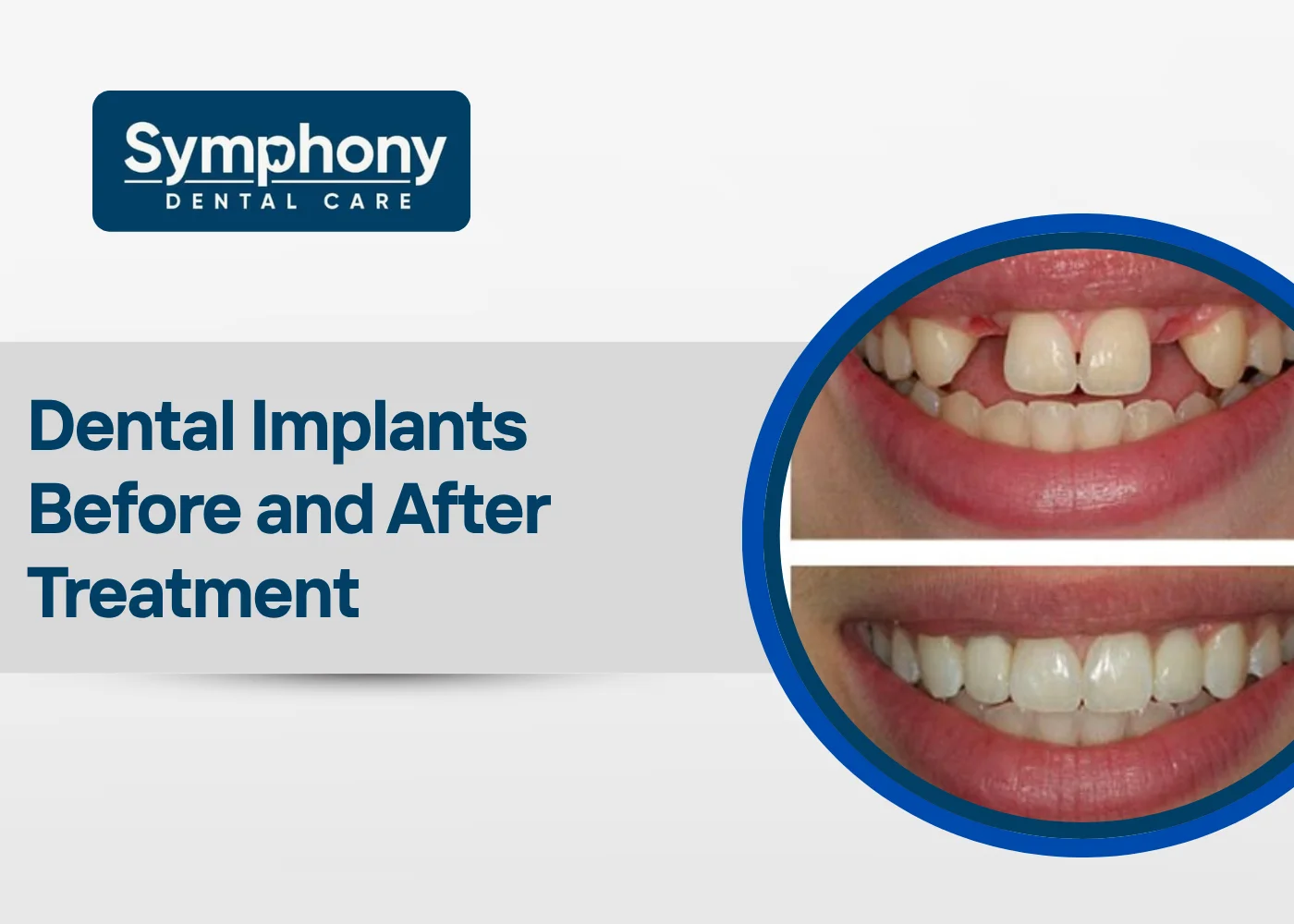
Before Treatment
The gap is obvious. But it’s worth talking about what happens around it that most people don’t see coming.
The jawbone underneath a missing tooth starts to shrink. It sounds alarming but it happens slowly enough that most people don’t connect the dots themselves. Bone needs stimulation to maintain its density and a tooth root is what provides that. Without it the body begins reabsorbing the bone, quietly, over months and years. Eventually this shows up in the face. A slight hollowness near the mouth. A look that people often attribute to getting older when the actual cause is bone loss from a missing tooth.
Neighboring teeth don’t stay where they are either. They migrate toward the gap. Gradually, almost imperceptibly, they shift and lean. The bite changes. Some people develop jaw tension or headaches before they ever trace it back to the original tooth loss.
And then there’s the situation where the tooth is still present but failing. Badly broken, infected, or eroded past saving. This comes with its own particular strain. Every meal requires thought. There’s a background worry that never fully goes away. People in this situation often describe finally getting treatment not with excitement but with simple, overwhelming relief. The thing that had been quietly draining their energy for months was finally gone.
Going Through the Treatment
Here is what the process actually looks like, step by step, when you go through it at Symphony Dental Care.
The consultation is where it starts. Dr. Sailee Kalyankar takes proper scans and X-rays, gets a full picture of what’s happening in your mouth, and then actually explains it to you. What she’s seeing, what the options are, what the timeline looks like for your specific situation. There’s no pressure to decide anything on the day. You leave with information, not a sales experience.
If the tooth is still in the mouth and needs to come out, that happens before the implant goes in. Whether the implant can be placed immediately afterward or whether the site needs time to settle first is a call made based on what’s actually going on, not a blanket policy.
Bone grafting is something that comes up more than people expect, particularly for patients who’ve had a missing tooth for some time without realizing the bone loss that was occurring underneath. If there isn’t sufficient bone to hold the implant properly, a graft is done first to rebuild it. It adds months. But placing an implant into bone that can’t support it properly is a problem down the line, so it’s worth doing right.
The implant post gets placed under local anesthesia. This is the part people dread most and the part that consistently surprises people with how manageable it actually is. The sensation is pressure rather than pain. The days following involve soreness that most people handle with over the counter medication without much difficulty.
Then the bone does its work. Over three to six months it grows around the titanium post and integrates with it. This is called osseointegration and it’s what gives the implant its permanence. A temporary crown sits in place during this time so there’s nothing visibly missing.
When the healing is confirmed the permanent crown gets fitted. Shade matched, shaped to fit your bite, checked and adjusted until it feels completely natural. After that appointment there’s nothing left to do.
After the Treatment
The first thing most patients notice is how normal the crown looks. They’d braced themselves for something that would read as artificial, that would catch light differently or feel slightly off. Instead there’s just a tooth. It sits at the gum line the way a natural tooth does. In photographs, in conversation, even in the mirror, there’s nothing there to identify.
The bone loss stops. Because the implant post is doing what the original root used to do, the jawbone stays stimulated and stable. Some patients who had already noticed subtle facial changes find things slowly improve as the bone maintains its density.
Eating changes completely for some people. The mental overhead of managing every meal, knowing which side to use, which foods to avoid, disappears. The implant holds. It doesn’t shift. You stop thinking about it.
That last part is what comes up most often in follow up appointments with Dr. Sailee Kalyankar. Not that the implant is impressive, though most patients do think so. Just that they’ve stopped being aware of it. Given how much space the original problem had been taking up, mentally and physically, that absence is its own kind of relief.
If you’ve been searching for a trusted dental implant clinic in Mumbai, Symphony Dental Care stands out for all the right reasons.
Located conveniently in Bandra West, the clinic combines advanced technology with a genuinely caring, patient-first approach. Dr. Sailee Kalyankar brings both clinical expertise and a warm, communicative style that puts nervous patients at ease from the very first appointment. Every treatment plan is personalized because no two smiles (or situations) are exactly the same.
Whether you’re a local resident looking for a dentist in Bandra West, or someone traveling across Mumbai for quality dental care, Symphony Dental Care offers world-class treatment in a comfortable, welcoming environment.
Frequently Asked Questions
Will it hurt?
Not the way people fear. Local anesthesia manages the procedure itself effectively. The soreness afterward is real but genuinely manageable. Most patients describe it as less than they prepared for.
Is it permanent?
The post is designed to last the rest of your life with normal care. The crown will eventually wear and may need replacing after fifteen or twenty years. The foundation underneath it stays.
What if I’ve already lost bone?
Bone grafting exists for this exact reason. It extends the timeline but it makes a successful implant possible for patients who’d been told elsewhere that they weren’t candidates.
How long is the full process?
Three months on the shorter end, up to nine months if grafting is required or healing takes more time. Dr. Sailee Kalyankar will give you a realistic personal timeline at the consultation so you’re not guessing.
How do I start?
Contact Symphony Dental Care and ask for a consultation. That’s the whole first step. One appointment, no obligation, just clarity.