

Tooth Filling Keeps Falling Out? When You May Need a Dental Crown Instead

Reviewed by Dr. Sailee Kalyankar
Last updated: August 5, 2026
Table of Contents
Why Does a Tooth Filling Keep Falling Out?
There are several reasons why your tooth filling keeps falling out repeatedly:
1. Large Cavity or Extensive Tooth Damage
Fillings are ideal for small to moderate cavities. When decay affects a large portion of the tooth, there may not be enough healthy tooth structure to hold the filling securely.
In such cases, a dental crown may be recommended because it covers the entire tooth and provides additional strength.
2. Weak Tooth Structure
A tooth can become weak due to deep decay, cracks, previous dental treatments, or excessive wear. A weak tooth may not support a filling properly, causing it to loosen or break.
3. Excessive Chewing Pressure
Teeth experience strong pressure while eating. If you frequently chew hard foods or have a habit of grinding your teeth, your filling may become damaged over time.
4. Old or Damaged Filling
Dental fillings are durable, but they do not last forever. Over time, fillings can wear down, develop gaps, or lose their bonding strength, which can lead to failure.
When Do You Need a Dental Crown Instead of Another Filling?
If your filling keeps falling out, your dentist may evaluate whether a dental crown is a better option.
A dental crown is usually recommended when:
- A large part of the tooth is damaged
- The filling has failed multiple times
- The tooth has cracks or fractures
- The tooth has undergone root canal treatment
- The remaining tooth structure is too weak
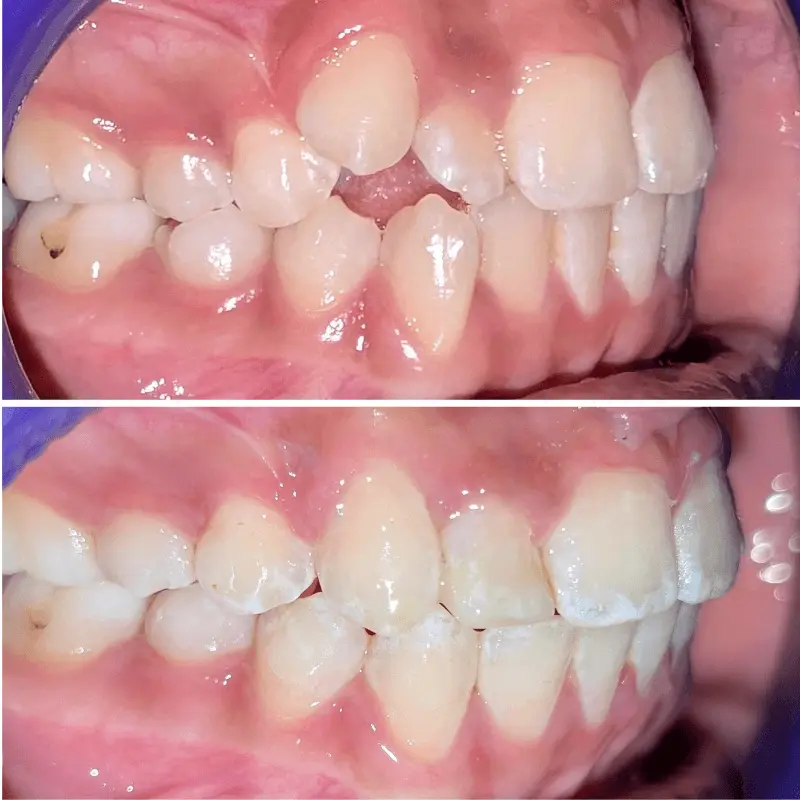
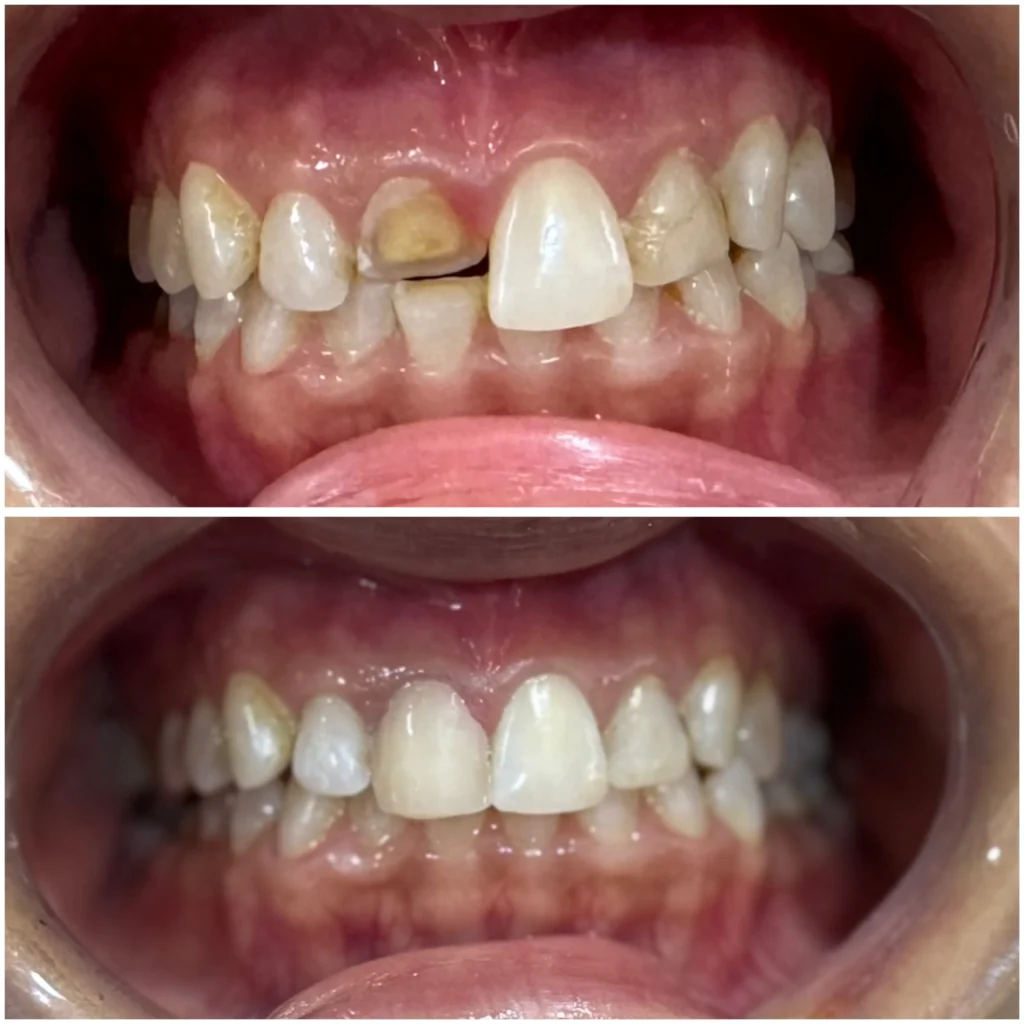
Unlike a filling that only repairs a small area, a crown covers the complete visible portion of the tooth and helps restore its strength and function.
You can also learn more about Dental Crowns and Bridges to understand how crowns protect damaged teeth.
Filling vs Dental Crown: Which Treatment Is Better?
The right treatment depends on the condition of your tooth.
Dental Filling
A filling is suitable when:
- The cavity is small or moderate
- Enough healthy tooth structure remains
- The tooth does not have major cracks
Benefits:
- Quick treatment
- Preserves natural tooth structure
- Effective for minor damage
Dental Crown
A crown is better when:
- The tooth is severely damaged
- A filling cannot provide enough support
- The tooth needs long-term protection
Benefits:
- Strengthens weak teeth
- Prevents further fractures
- Improves tooth appearance and function
Your dentist will check the tooth condition and may recommend an X-ray before deciding between a filling and a crown.
Can a Tooth Be Saved After a Filling Falls Out?
Yes, most teeth can be saved if treated at the right time. A missing filling should not be ignored because bacteria can enter the exposed area and increase the risk of infection.
If the damage has reached the inner part of the tooth, you may need Root Canal Treatment before getting a dental crown.
For teeth with significant structural damage, Post and Core Treatment may help rebuild support before placing the final crown.
What Should You Do If Your Filling Falls Out?
If your filling falls out, follow these steps:
- Contact your dentist for an appointment
- Avoid chewing from that side
- Keep the area clean with gentle brushing
- Avoid very hot, cold, or sugary foods
- Do not try to fix the filling yourself
Early treatment can prevent further damage and increase the chances of saving your natural tooth.
How to Prevent Your Dental Filling From Falling Out?
You can reduce the chances of filling failure by following good oral care habits:
- Brush twice daily with fluoride toothpaste
- Floss regularly
- Visit your dentist for routine check-ups
- Avoid chewing extremely hard foods
- Manage teeth grinding problems
- Treat cavities at an early stage
Regular dental visits help identify weak fillings before they become a bigger problem.
When May You Need a Dental Crown Treatment?
A crown may be recommended when a tooth requires more extensive protection than a filling can provide.
Common situations include:
Large Existing Filling
If most of the tooth’s chewing surface has already been replaced by a filling, there may not be enough natural structure left to support another large restoration.
Repeatedly Failing Fillings
If the same filling repeatedly breaks or falls out, your dentist may investigate whether the tooth needs a more comprehensive restoration.
Repeated failure does not automatically mean a crown is necessary, but it is a reason to reassess the tooth rather than repeatedly replacing the restoration without identifying the cause.
Cracked or Fractured Tooth
A crown can provide coverage and protection for certain cracked or fractured teeth.
The AAE notes that treatment for a cracked tooth depends on the type, location, and extent of the crack. When the crack has reached the pulp, root canal treatment followed by a crown may be required; cracks extending below the gum line may make the tooth unrestorable.
Root Canal-Treated Tooth
A tooth that has undergone root canal treatment may require a definitive restoration to protect the remaining structure.
The AAE explains that after root canal treatment, the tooth is restored with a crown or filling depending on the clinical situation.
Did You Know? The chances of successfully saving a knocked-out permanent tooth are generally highest when treatment begins within the first hour after the injury.
Filling vs Dental Crown: What's the Difference?
| Feature | Dental Filling | Dental Crown |
|---|---|---|
| Main Purpose | Repairs a cavity or limited tooth damage | Covers and protects a weakened or extensively damaged tooth |
| Coverage | Usually limited to the damaged area | Covers most or all of the visible tooth |
| Tooth Structure Required | Suitable when enough healthy structure remains | Often considered when substantial structure is lost |
| Common Uses | Small to moderate cavities | Large restorations, broken or weakened teeth |
| Procedure | Usually less extensive | More extensive |
| Laboratory Work | Usually not required | Often custom-made |
| Protection | Localised restoration | Greater structural coverage |
Timelines are approximate and vary based on individual treatment plans and clinical needs.
Important: A Crown Is Not Always the Answer
A filling falling out does not automatically mean you need a crown.
Your dentist may recommend:
Another filling
→ when sufficient healthy tooth structure remains.
Dental crown
→ when the tooth is significantly weakened or requires greater protection.
Root canal + crown
→ when the tooth’s pulp is infected or irreversibly damaged and the tooth can still be restored.
Extraction
→ when the tooth is too severely damaged to be predictably restored.
The correct choice requires a clinical examination and, when indicated, dental imaging.
According to the American Academy of Cosmetic Dentistry (AACD) recommends addressing existing oral health problems before beginning cosmetic dental procedures to support predictable and long-lasting outcomes.
Reference:
https://www.aacd.com/
Dental Crown Procedure: What Should You Expect?
Step 1: Tooth Preparation
The damaged or weakened portions of the tooth are removed, and the tooth is shaped so that the crown can fit securely.
The amount of preparation depends on the type of crown and the amount of healthy tooth structure available.
Step 2: Build-Up, If Required
If significant tooth structure has been lost, a core build-up may be required before the crown is placed.
A build-up helps provide a suitable foundation for the final restoration when there is insufficient remaining tooth structure.
The ADA describes a crown build-up as rebuilding the anatomical crown when additional tooth strength and retention are needed for a restorative crown.
Step 3: Digital Scan or Impression
Your dentist may take a digital intraoral scan or traditional impression of the prepared tooth.
This information is used to create a crown that fits the prepared tooth and works with your bite.
Step 4: Temporary Crown
If the permanent crown is being fabricated in a dental laboratory, a temporary crown may be placed while you wait.
The NHS notes that laboratory fabrication can mean patients receive a temporary crown until the permanent crown is ready.
Step 5: Permanent Crown Placement
Once the final crown is ready, the dentist checks:
- Fit
- Bite
- Shape
- Contact with neighbouring teeth
- Appearance
- Comfort
If everything is satisfactory, the crown is permanently cemented or bonded according to the restoration and clinical requirements.
Temporary Crown vs Permanent Crown
| Feature | Temporary Crown | Permanent Crown |
|---|---|---|
| Purpose | Protects the prepared tooth temporarily | Definitive restoration |
| Duration | Short-term | Long-term |
| Material | Temporary restorative material | Ceramic, zirconia, metal, or other appropriate material |
| Final Fit | Temporary | Custom-fitted |
| Appearance | Usually functional/aesthetic but temporary | Designed for final appearance and function |
How Much Does a Dental Crown Cost?
The cost of a dental crown varies between patients and clinics. There is no single price that applies to every crown.
Factors that may influence the overall cost include:
- Crown material
- Tooth location
- Amount of remaining tooth structure
- Need for a core build-up
- Need for root canal treatment
- Diagnostic imaging
- Laboratory charges
- Complexity of the case
- Dentist’s expertise
- Number of teeth being treated
Therefore, a dental crown should not be evaluated based on the crown price alone.
Can a Crown Prevent a Tooth From Breaking?
A crown can provide substantial coverage and protection to a structurally compromised tooth, but it does not make a tooth impossible to break.
This distinction is especially important for cracked teeth.
The AAE explains that a crown can provide maximum protection for certain cracked teeth, but treatment outcomes depend on the type, location, and extent of the crack.
Factors such as severe grinding, trauma, deep cracks, or insufficient remaining tooth structure can still affect prognosis.
Expert Insights
According to Dr. Sailee Kalyankar, Cosmetic & Restorative Dentist at Symphony Dental Care, Bandra West, a repeatedly failing filling should prompt a closer examination of the tooth rather than an automatic decision to place another filling.

Dr. Sailee Kalyankar
BDS, MDS | Conservative Dentist and Microscopic Endodontist. Khar West | Bandra West.
Registration Number A- 35825
Why Patients Choose Symphony Dental Care for Smile Makeovers
When a filling repeatedly falls out, having access to a dental team nearby can make it easier to arrange an examination before the tooth develops further problems.
For patients in Bandra West and surrounding areas like Khar Wesr, Andheri, Pali Hill continuity of care can be particularly useful when treatment involves more than one stage, such as:
Examination → Treatment planning → Tooth preparation → Temporary restoration → Permanent crown → Follow-up
At Symphony Dental Care, Bandra West, Dr. Sailee Kalyankar and the clinical team can assess the condition of a repeatedly failing restoration and discuss whether a new filling, dental crown, root canal treatment, or another approach is appropriate.
Frequently Asked Questions (FAQs)
A filling may repeatedly fall out because of extensive tooth damage, a large restoration, new decay around the filling, a crack in the tooth, heavy biting forces, teeth grinding, or insufficient remaining tooth structure.
There is no fixed number of times a filling can safely be replaced. Each replacement may require removal of additional damaged or compromised tooth structure.
Not necessarily. A replacement filling may be suitable if enough healthy tooth structure remains and the tooth is otherwise structurally sound.
It depends on the type and extent of the crack. Some minor fractures or fractured cusps may be treated with a restoration, while certain cracked teeth may require a crown. If the crack extends into the pulp, root canal treatment may also be necessary.
Repeatedly replacing a failed filling without addressing why it failed may not solve the underlying problem. Your dentist may need to assess the remaining tooth structure, decay, cracks, bite forces, and pulp condition to determine whether a different restoration would provide better protection.
A crown can provide long-term service when appropriately planned, placed, and maintained, but its lifespan varies between patients. Oral hygiene, bite forces, teeth grinding, diet, the condition of the underlying tooth, and regular dental care can all affect longevity.
Once the permanent crown has been placed and your dentist confirms that it is properly fitted, you can generally return to normal eating. If you have a temporary crown, your dentist may recommend avoiding particularly hard or sticky foods until the permanent restoration is placed.
Not always. A crown and root canal treatment serve different purposes. A crown protects and restores the tooth, while root canal treatment treats infection or irreversible inflammation inside the tooth. If the pulp is healthy, a root canal may not be necessary.
The tooth is typically prepared under local anaesthesia, so you should not feel significant pain during the procedure.
Keep the area clean, avoid chewing hard foods on that side, and arrange a dental appointment. If the tooth is sensitive, avoid very hot or cold foods. Do not attempt to permanently glue the filling back into place yourself.
It’s better to have the tooth assessed rather than assuming it is fine. A lost filling can leave the underlying tooth vulnerable to further damage or decay.
Conclusion
A dental filling that keeps falling out is more than an inconvenience. Repeated failure can sometimes indicate that the tooth has become weakened, the restoration is too large, new decay has developed, or the tooth has a crack or other structural problem.
However, a failed filling does not automatically mean you need a dental crown.
A replacement filling may be appropriate when enough healthy tooth structure remains. A crown may be considered when the tooth needs more extensive coverage and protection. If the pulp is infected or irreversibly inflamed, root canal treatment may be necessary before the final restoration.
The most appropriate treatment can only be determined after examining the tooth and, when clinically indicated, taking dental X-rays.
If your filling has fallen out repeatedly, don’t simply wait for the next problem. Have the tooth evaluated so you can understand the reason for the failure and choose an appropriate long-term treatment.
Thinking About Transforming Your Smile?