
Why Does a Root Canal Tooth Break? When Post & Core Treatment Can Save It

Reviewed by Dr. Sailee Kalyankar
Last updated: July 25, 2026
Table of Contents
Why Does a Root Canal Tooth Break?
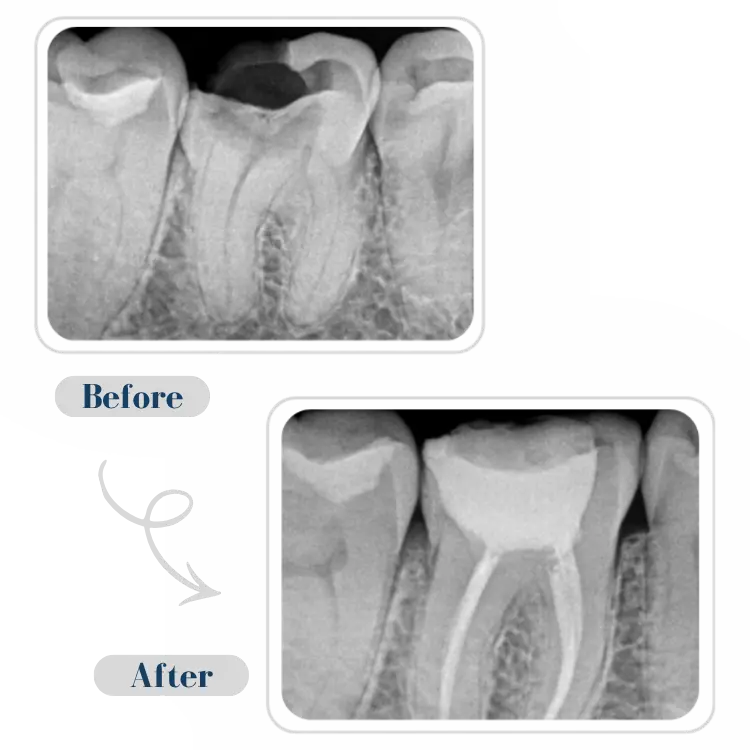
A root canal treatment can help save a severely damaged or infected tooth and preserve it instead of extracting it. However, completing a root canal does not automatically make the tooth resistant to fracture. If a tooth has already lost a significant amount of natural structure because of decay, cracks, large restorations, or previous damage, it may remain structurally weak.
In such situations, post and core after root canal treatment may be considered to rebuild the missing tooth structure and provide a foundation for a final crown.
Why Does a Root Canal Tooth Break?
A root canal-treated tooth can fracture for several reasons. The main concern is usually the amount of natural tooth structure that remains rather than the root canal procedure itself.
Common factors include:
- Extensive tooth decay before root canal treatment
- Large fillings or previous restorations
- Existing cracks or fractures
- Loss of tooth structure during treatment
- Heavy biting forces
- Teeth grinding or clenching
- Delaying the recommended final restoration
A root canal removes infected tissue from inside the tooth, but it cannot replace tooth structure that has already been lost. This is why restoring the tooth properly after treatment is an important part of long-term care.
If you want to understand the treatment itself, you can learn more about Root Canal Treatment in Bandra West.
Can a Root Canal Tooth Break Without Pain?
Yes. A root canal-treated tooth can sometimes develop a crack or fracture without causing immediate pain. Since the nerve inside the tooth has already been treated, typical sensitivity may not always occur.
However, symptoms such as a chipped portion, discomfort while biting, food getting trapped around the tooth, or a loose or broken restoration should not be ignored.
Even when there is no pain, a dental examination can help identify whether the tooth remains restorable.
What Is Post and Core Treatment?
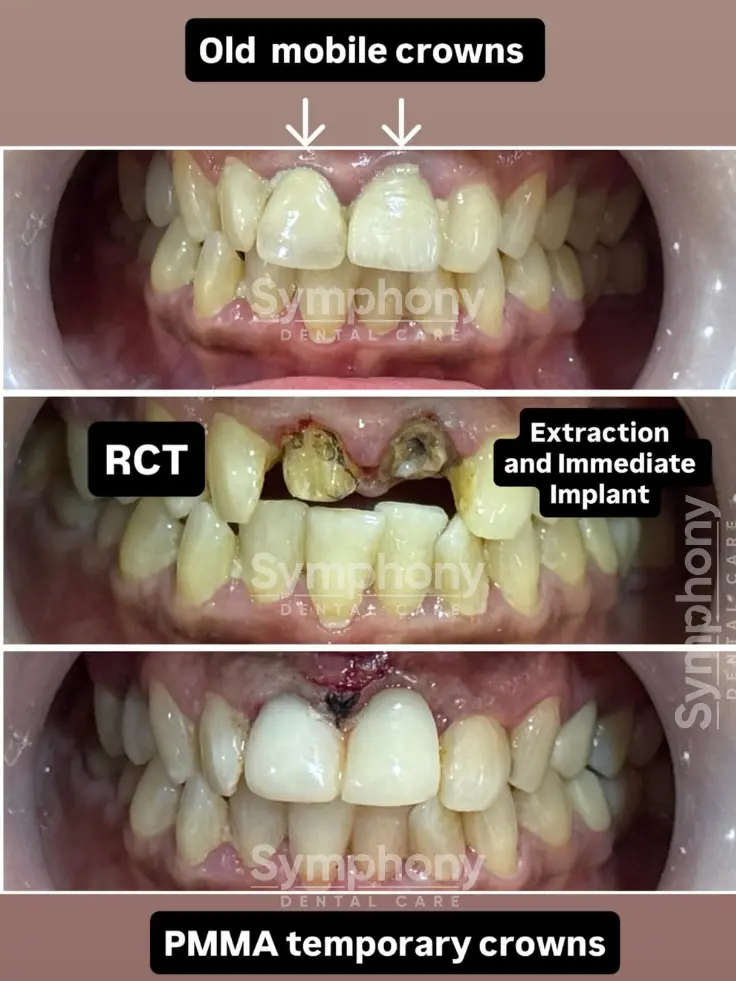
Post and core treatment is a restorative procedure used when a tooth does not have enough remaining structure to adequately support or retain a final crown.
A post is placed inside the prepared root canal space, while the core rebuilds the missing portion of the tooth above the gum. A crown can then be placed over the restored tooth when clinically appropriate.
Importantly, a post is not required after every root canal. If enough natural tooth structure remains to support the final restoration, a dentist may recommend a crown without a post.
The decision should therefore be based on the individual tooth’s condition rather than using a post routinely.
When Is Post and Core Needed After Root Canal?
An Experienced dentist may consider post and core treatment when:
- A substantial portion of the tooth structure is missing
- The tooth has been extensively damaged by decay
- The remaining tooth structure cannot adequately retain a crown
- The tooth has fractured but remains clinically restorable
- Additional retention is required for the final restoration
Before recommending treatment, the dentist needs to evaluate the remaining tooth structure, root condition, previous root canal treatment, and surrounding bone and gum support.
Can Post and Core Save a Broken Root Canal Tooth?
Sometimes, yes—but not every fractured tooth can be saved.
The possibility of restoring a broken tooth depends on the location and depth of the fracture, remaining tooth structure, root condition, periodontal support, and quality of the previous root canal treatment.
For example, a tooth with substantial structure remaining above the gum may have a better restorative outlook than one with a severe fracture extending deep into the root.
Certain vertical root fractures can make a tooth difficult or impossible to restore. Therefore, a post should not be considered a way to “repair” every broken root canal tooth. Proper examination and dental imaging are necessary before deciding whether restoration is appropriate.
What Happens During Post and Core Treatment?
The exact procedure depends on the condition of the tooth, but treatment generally involves:
- Dental examination:
The dentist assesses the tooth, remaining structure, bite, gums, and surrounding tissues. - Dental imaging:
X-rays or other appropriate imaging may be used to evaluate the root and supporting structures. - Post placement, when indicated:
A post is placed within the prepared root canal space to provide retention for the core. - Core buildup:
The missing portion of the tooth is reconstructed to create a suitable foundation. - Final crown:
A crown may then be placed to restore the tooth’s shape, function, and protection.
The purpose of the treatment is to create a stable foundation for the definitive restoration while preserving the remaining natural tooth structure whenever possible.
Did You Know? The chances of successfully saving a knocked-out permanent tooth are generally highest when treatment begins within the first hour after the injury.
Post and Core vs. Dental Crown: Are They the Same?
No. A post and core and a dental crown perform different functions.
The post and core help rebuild or retain the foundation of a significantly damaged tooth. The crown is the final restoration placed over the prepared tooth.
Some root canal-treated teeth may need only a crown, while others may require a post and core before the crown. The choice depends on how much healthy tooth structure remains.
You can also learn more about Dental Crowns & Bridges and their role in restoring damaged teeth.
Timelines are approximate and vary based on individual treatment plans and clinical needs.
Why Is Timely Restoration Important After Root Canal?
After root canal treatment, the tooth should be assessed for the appropriate definitive restoration. Leaving a significantly weakened tooth without adequate protection may expose it to everyday chewing forces and increase the risk of further damage.
Timely restoration allows the dentist to determine whether the tooth requires a crown, post and core followed by a crown, or another restorative solution.
This is particularly important for teeth that have already lost a large amount of structure.
According to the American Academy of Cosmetic Dentistry (AACD) recommends addressing existing oral health problems before beginning cosmetic dental procedures to support predictable and long-lasting outcomes.
Reference:
https://www.aacd.com/
How Can You Protect a Root Canal-Treated Tooth?
After treatment, maintaining good oral hygiene and following your dentist’s restoration and follow-up recommendations can help protect the tooth.
It is also sensible to avoid using a weakened tooth to bite extremely hard objects. Patients who grind or clench their teeth should discuss this with their dentist because excessive biting forces can contribute to restoration or tooth fracture.
Regular dental examinations can also help identify problems before they become more extensive.
What Factors Determine Whether a Tooth Can Be Saved?
The decision to save a broken root canal tooth depends on several factors, including:
- Amount of healthy tooth structure remaining
- Location and severity of the fracture
- Condition of the root
- Quality of the existing root canal treatment
- Bone and gum support
- Ability to restore the tooth with a predictable crown
A dentist should assess these factors before recommending Post and Core Treatment in Bandra West.
The objective is not simply to place a post but to determine the most appropriate way to restore and preserve the natural tooth.
Why Choose Symphony Dental Care for Post and Core Treatment in Bandra West?
At Symphony Dental Care, restorative treatment can be planned according to the condition of the individual tooth rather than following a one-size-fits-all approach.
For a weakened or fractured root canal-treated tooth, the evaluation should focus on the remaining tooth structure, root condition, surrounding tissues, and the type of final restoration required.
This patient-specific approach helps determine whether a post and core is actually necessary and whether the tooth is suitable for restoration.
Patients looking for Post and Core Treatment in Bandra West can discuss their symptoms and treatment options with the dental team and undergo an appropriate clinical assessment before proceeding.
Expert Insights
"Patients often think a smile makeover is only about making teeth whiter or straighter. In reality, successful treatment begins with careful diagnosis, healthy gums, and a personalised plan that balances aesthetics with long-term function. Every smile should complement the patient's facial features while remaining comfortable, healthy, and easy to maintain."

Dr. Sailee Kalyankar
BDS, MDS | Conservative Dentist and Microscopic Endodontist. Khar West | Bandra West.
Registration Number A- 35825
Why Patients Choose Symphony Dental Care for Smile Makeovers
A smile makeover is a highly personalised journey that combines clinical expertise with aesthetic planning. At Symphony Dental Care, Bandra West, every treatment plan is designed around the individual’s facial features, oral health, and long-term goals rather than following a standard cosmetic template.
Dr. Sailee Kalyankar begins with a comprehensive evaluation to understand each patient’s concerns, explain the available treatment options, and recommend procedures that are appropriate for both function and appearance.
Frequently Asked Questions (FAQs)
A full makeover of the front teeth typically costs ₹90,000 to ₹5,00,000, depending on the materials used and the number of teeth treated.
Whitening can be done in one visit; porcelain veneers usually take 2–3 visits over 2–4 weeks; aligner-based makeovers take several months as the teeth move.
Yes. Digital smile design and a wax mock-up let you preview and approve your “after” smile before any tooth is prepared.
Well-made porcelain veneers, planned with digital smile design and finished by a skilled ceramist, look natural and are matched to your face and adjacent teeth.
Porcelain veneers typically last 10–15+ years; composite veneers 5–7 years. Good oral hygiene and a night guard (if you grind) extend their lifespan.
No. Veneers are only one of many treatment options. Some patients achieve excellent results with professional teeth whitening, composite bonding, Invisalign®, or dental crowns. Your treatment plan should be based on your oral health, smile goals, and facial aesthetics rather than a single cosmetic procedure.
Most smile makeover procedures are performed with minimal discomfort using modern dental techniques and local anaesthesia when required. Some treatments may cause temporary sensitivity or mild soreness, but significant pain is uncommon. Your dentist will explain what to expect for each procedure.
In many cases, mild to moderate alignment issues can be treated using Invisalign® clear aligners. For very minor cosmetic concerns, composite bonding or porcelain veneers may improve appearance, although they do not replace orthodontic treatment when significant tooth movement is required.
Porcelain veneers can last many years with appropriate care, while composite veneers generally have a shorter lifespan. Longevity depends on oral hygiene, dietary habits, teeth grinding, and regular dental check-ups.
This depends on the procedures performed. Most patients can gradually return to normal eating habits once treatment is completed and healing has progressed. Your dentist will provide personalised instructions, especially after veneers, crowns, implants, or gum procedures.
Yes. Missing teeth may be replaced with dental implants, bridges, or other suitable restorative options before or during the smile makeover process to restore both aesthetics and function.
Not necessarily. While professional whitening is common, it is only recommended when appropriate. Some patients may require orthodontic treatment, veneers, bonding, or crowns instead.
Conclusion
A smile makeover is more than a cosmetic enhancement—it is a carefully planned combination of treatments designed to improve the appearance, function, and health of your smile.
Because every patient has different goals and clinical needs, the process, timeline, and cost vary from person to person. The most successful smile makeovers begin with a detailed consultation, realistic treatment planning, and a focus on preserving healthy tooth structure wherever possible.
By understanding your options, asking the right questions, and choosing an experienced cosmetic dentist, you can make an informed decision that supports both your confidence and your long-term oral health.
Thinking About Transforming Your Smile?