
Zirconia Dental Implants: The Best Metal-Free Option for Missing Teeth

Reviewed by Dr. Sailee Kalyankar
Last updated: September 14, 2026
Table of Contents
If you are missing one or more teeth, you have probably already come across two implant options: traditional titanium implants and the newer zirconia dental implants. Both are considered safe and effective, but more patients today are asking specifically about metal-free solutions, either for cosmetic reasons, medical sensitivities, or personal preference.
After years of working with patients who are researching tooth replacement options, one thing is clear: people do not just want a replacement tooth. They want something that looks natural, feels stable, and does not cause long-term complications.
This article expalins everything you need to know about zirconia dental implants, including the procedure, healing time, cost, and how they compare to titanium implants, so you can walk into your dental consultation with clear, informed questions.
What Are Zirconia Dental Implants?
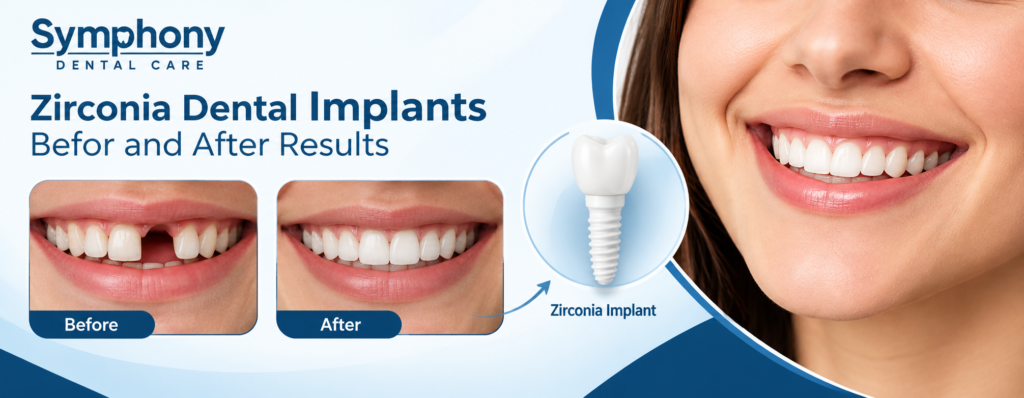
Zirconia dental implants are tooth root replacements made from zirconium dioxide, a strong, biocompatible ceramic material. Unlike titanium implants, which are metal, zirconia implants are completely metal-free. They are placed into the jawbone in a single piece or two-piece design and serve as the foundation for a replacement crown.
Zirconia has been used in medical and dental applications for decades, mainly because it is:
- Highly biocompatible, meaning the body rarely rejects it
- Naturally tooth-colored, avoiding the greyish tint that can sometimes show through gum tissue with metal implants
- Resistant to corrosion since there is no metal to oxidize over time
- Strong enough to handle normal biting and chewing forces
For patients with thin gum tissue, metal allergies, or a strong preference for natural aesthetics, zirconia implants for missing teeth have become a genuinely reliable alternative to titanium.
Zirconia vs Titanium Dental Implants
This is usually the first question patients ask, and it deserves an honest, non-biased answer.
Benefits of Zirconia Implants
- Better aesthetics for patients with a thin or receding gum line
- No metal ions released into surrounding tissue
- Naturally hypoallergenic, useful for patients with metal sensitivity
- Smooth surface that resists plaque buildup slightly better in some studies
Benefits of Titanium Implants
- Longer clinical track record, with decades of research data
- Slightly more flexibility in implant design (two-piece systems are more common)
- Generally more affordable
- Preferred for complex bone grafting cases
In short, zirconia is not “better” in every case. It is better for a specific type of patient, someone prioritizing a metal-free option, natural appearance, or biocompatibility. Titanium remains a strong, well-proven choice for many others.
Who Should Consider Zirconia Dental Implants?
Based on common patient profiles, zirconia implants tend to be the right fit for:
- Patients with known or suspected metal allergies or sensitivities
- Individuals with autoimmune conditions who prefer to avoid metal in the body
- Patients replacing front teeth, where a natural, tooth-like appearance matters most
- People with thin gum tissue where a metal implant edge might become visible over time
- Patients who specifically want a holistic or metal-free approach to dental care
If none of these apply to you, titanium implants may still be a perfectly reasonable and cost-effective option worth discussing with your dentist.
The Zirconia Implant Process: Step-by-Step
Understanding the tooth implant process time and steps helps set realistic expectations. Most zirconia implant treatments happen in a few clearly defined stages.
Step 1: Initial Consultation and Assessment
An experienced dentist examines your jawbone density, gum health, and overall oral condition using X-rays or a 3D scan. This step determines whether you are a suitable candidate and whether any bone grafting is needed first.
Step 2: Treatment Planning
Based on the scan, the dentist creates a customized plan, including implant size, placement angle, and the number of implants needed for single or multiple missing teeth.
Step 3: Implant Placement Surgery
The zirconia implant is surgically placed into the jawbone under local anesthesia. This is a routine outpatient procedure and typically takes 45 minutes to a couple of hours, depending on the number of implants.
Step 4: Healing and Osseointegration
This is the phase where the jawbone fuses with the implant, a process called osseointegration. This typically takes 3 to 6 months, though it can vary based on bone quality and individual healing rate.
Step 5: Abutment and Crown Placement
Once healing is complete, the dentist attaches an abutment and places the final ceramic crown, matched to the natural color and shape of your surrounding teeth.
Zirconia Dental Implants At Symphony Dental Care
Two Phases vs Three Phases of Implant Treatment
Dental implant surgery is generally categorized into either a two phase or three phase treatment approach, and understanding this distinction helps patients plan their schedule realistically.
Two Phase Implant Treatment
In this approach, the implant is placed first and allowed to heal beneath the gum line before a second minor procedure exposes it for the crown attachment. This is common when bone density is average and no additional grafting is required.
Three Phase Implant Treatment
This approach adds an initial phase for bone grafting or sinus lift procedures before implant placement, followed by healing and then the final restoration phase. Patients with lower bone density in the jaw, often those who have been missing teeth for several years, typically need this three phase approach.
Knowing which phase applies to your case in advance can help you better estimate both the tooth implant process time and the total cost involved.
Dental Implant Cost: What Influences the Price
One of the most searched questions is around dental implant cost, and specifically dental implant cost in India, since costs vary widely based on several factors.
Costs typically depend on:
- Material used, zirconia implants are generally priced higher than titanium due to material and manufacturing complexity
- Number of implants required for single or multiple missing teeth
- Whether bone grafting or a sinus lift is needed beforehand
- The clinic’s location and the experience level of the treating dentist
- Type of crown material used for the final restoration
While exact pricing should always come from an in-person consultation, patients researching dental implant cost in India often find it significantly more affordable compared to countries like the United States, United Kingdom, or Australia, without a compromise on quality when treated by qualified professionals.
It is also worth noting that some patients confuse implant cost with teeth transplant cost. A dental implant is a synthetic root and crown replacement, while a tooth transplant refers to relocating a natural tooth from one site to another, which is a far less common and more specialized procedure.
Did You Know? The chances of successfully saving a knocked-out permanent tooth are generally highest when treatment begins within the first hour after the injury.
Real-World Example: A Typical Patient Journey
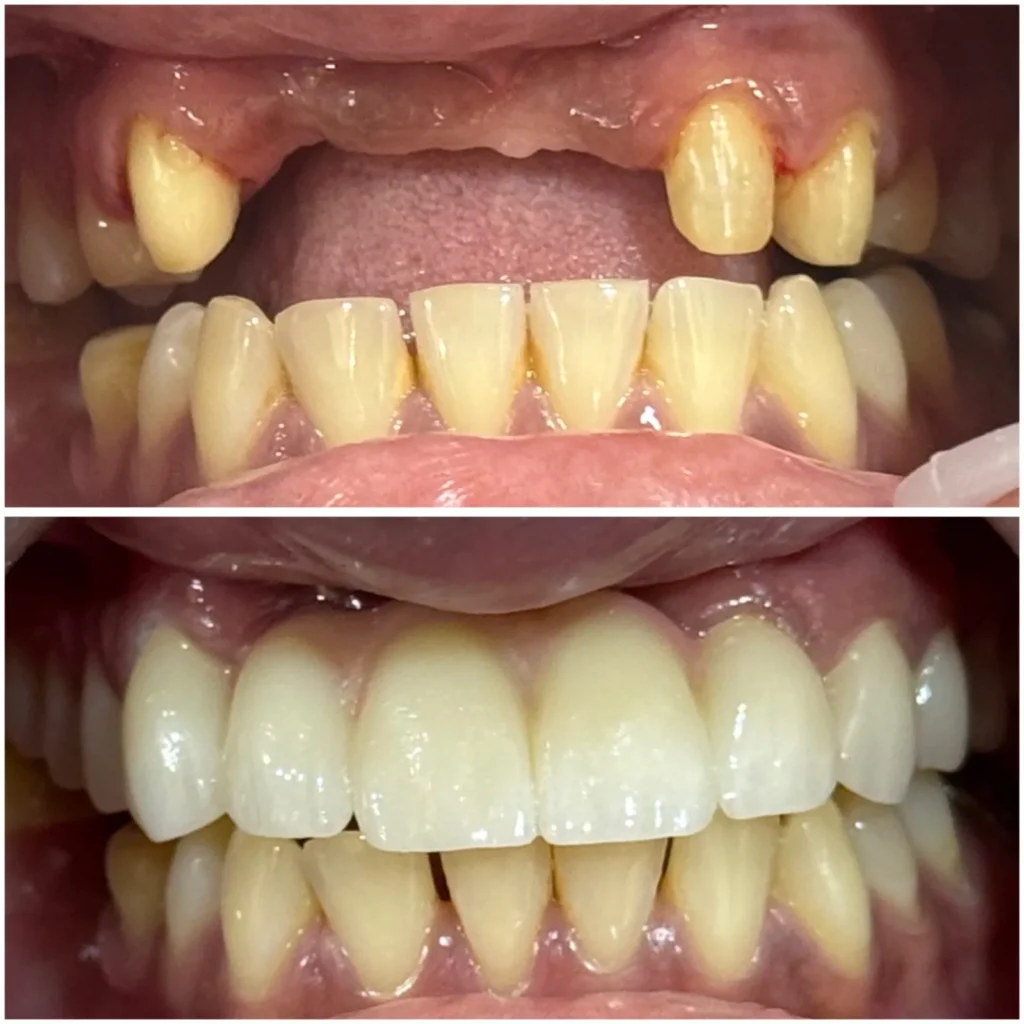
Consider a patient in their late 30s who lost a front tooth due to an old sports injury. Over the years, the gum tissue around the missing tooth had thinned, making a titanium implant edge a cosmetic concern. After an assessment, a two phase zirconia implant treatment was recommended.
The implant was placed, followed by roughly four months of healing before the final crown was fitted. The end result closely matched the surrounding natural teeth, with no visible discoloration at the gum line, a common concern that initially brought the patient in for a consultation.
This type of case is fairly typical for patients choosing zirconia implants primarily for front teeth or visible areas of the smile.
Real-World Example: A Typical Patient Journey
Consider a patient in their late 30s who lost a front tooth due to an old sports injury. Over the years, the gum tissue around the missing tooth had thinned, making a titanium implant edge a cosmetic concern. After an assessment, a two phase zirconia implant treatment was recommended.
The implant was placed, followed by roughly four months of healing before the final crown was fitted. The end result closely matched the surrounding natural teeth, with no visible discoloration at the gum line, a common concern that initially brought the patient in for a consultation.
This type of case is fairly typical for patients choosing zirconia implants primarily for front teeth or visible areas of the smile.
Zirconia Dental Implants at Symphony Dental Care
If you have missing teeth and are considering a metal-free dental implant, Symphony Dental Care can evaluate whether zirconia implants are appropriate for your situation.
The treatment planning process should consider your:
- Bone condition
- Gum health
- Missing tooth location
- Bite
- Smile aesthetics
- Overall dental health
- Long-term maintenance needs
For patients looking for a Dentist in Bandra West or Dentist in Khar West, a personalised implant consultation can help you understand whether zirconia or titanium is the more suitable option.
Similarly, if you are searching for a Dental clinic in Bandra West or Dental clinic in Khar West for missing tooth replacement, ask about both the implant material and the complete treatment plan—not just the implant price.
How Long Do Zirconia Implants Last?
With proper oral hygiene and regular dental checkups, zirconia dental implants can last 15 to 25 years or longer in many cases. Long-term success largely depends on:
- Maintaining good oral hygiene
- Avoiding excessive grinding or clenching without a night guard
- Regular professional cleanings and checkups
- Avoiding smoking, which can slow healing and affect implant longevity
Is the Zirconia Implant Procedure Painful?
Most patients report mild discomfort rather than significant pain, similar to a tooth extraction recovery. Local anesthesia is used during surgery, and mild swelling or soreness for a few days afterward is normal and manageable with standard pain relief as advised by the dentist.
Timelines are approximate and vary based on individual treatment plans and clinical needs.
Expert Insights
According to Dr. Sailee Kalyankar, Zirconia implants are an excellent metal-free option for selected patients, but the implant material is only one part of successful treatment. Proper diagnosis, implant positioning, healthy gums and long-term maintenance are equally important.

Dr. Sailee Kalyankar
BDS, MDS | Conservative Dentist and Microscopic Endodontist. Khar West | Bandra West.
Registration Number A- 35825
Frequently Asked Questions (FAQs)
Neither is universally better. Zirconia is metal-free and offers superior aesthetics for visible teeth, while titanium has a longer clinical history and is often more budget-friendly. The right choice depends on your gum type, bone health, and personal preference.
The full tooth implant process time usually ranges from 4 to 8 months, factoring in healing and osseointegration, though simple two phase cases can be shorter and three phase cases with bone grafting can take longer.
Costs vary based on the clinic, material, and complexity of the case. Zirconia implants generally cost more than titanium implants due to material properties. A personalized quote from a dental consultation gives the most accurate figure.
Yes, zirconia implants can support single crowns, bridges, or in some cases, full arch restorations, depending on jawbone condition and the treatment plan designed by your dentist.
Not always. Bone grafting is only required in three phase treatment cases where the jawbone lacks sufficient density or volume to support the implant securely.
Yes, since zirconia is tooth-colored and does not carry the risk of a greyish shadow through the gum tissue, it is often preferred for front teeth and visible smile areas.
olored and does not carry the risk of a greyish shadow through the gum tissue, it is often preferred for front teeth and visible smile areas.
Yes, this is one of the primary reasons patients choose zirconia. Since it contains no metal, it is considered a suitable option for individuals with known metal sensitivities.
Most patients describe the discomfort as mild to moderate, manageable with standard pain medication, and comparable to recovery after a tooth extraction.
A dental consultation involving X-rays or a 3D scan is the only reliable way to determine candidacy, based on bone density, gum health, and your specific dental history.
Conclusion
A gummy smile has several possible causes, from excess gum tissue and short tooth crowns to lip mobility and jawbone position, and the right correction depends entirely on which one applies to you. The encouraging part is that most cases can be treated conservatively, with procedures like laser gum contouring offering fast, comfortable, and long-lasting results. A proper clinical evaluation is always the first and most important step, since it determines whether you need a simple in-chair procedure or a more comprehensive treatment plan.
If you’ve been self-conscious about a gummy smile and want an honest assessment of what’s actually causing it, Symphony Dental Care in Bandra West offers personalized gummy smile evaluations and treatment planning under Dr. Sailee Kalyankar. Book a consultation to find out which correction option is the right fit for your smile.
Thinking About Root Canal or Extraction?