

Root Canal Before & After: Pain, Healing and Results

Reviewed by Dr. Sailee Kalyankar
Last updated: August 20, 2026
Table of Contents
Root Canal Before & After
A root canal can sound intimidating especially when you’ve heard stories about how painful it is. But for someone dealing with a severely decayed or infected tooth, the reality is often very different.
Modern root canal treatment is designed to remove infection, relieve pain, and save the natural tooth. The procedure itself is performed under local anesthesia, and many patients find that the discomfort from the original tooth infection is far worse than the treatment.
But what should you actually expect before and after a root canal? From the symptoms that may lead to treatment to the healing period, eating restrictions, and the final result, understanding the complete journey can make the experience much less stressful.
At Symphony Dental Care, patients are guided through each stage so they know what to expect before, during, and after treatment. If you’re looking for an experienced Dentist in Bandra West or Dentist in Khar West, here’s what you should know about the root canal before-and-after process.
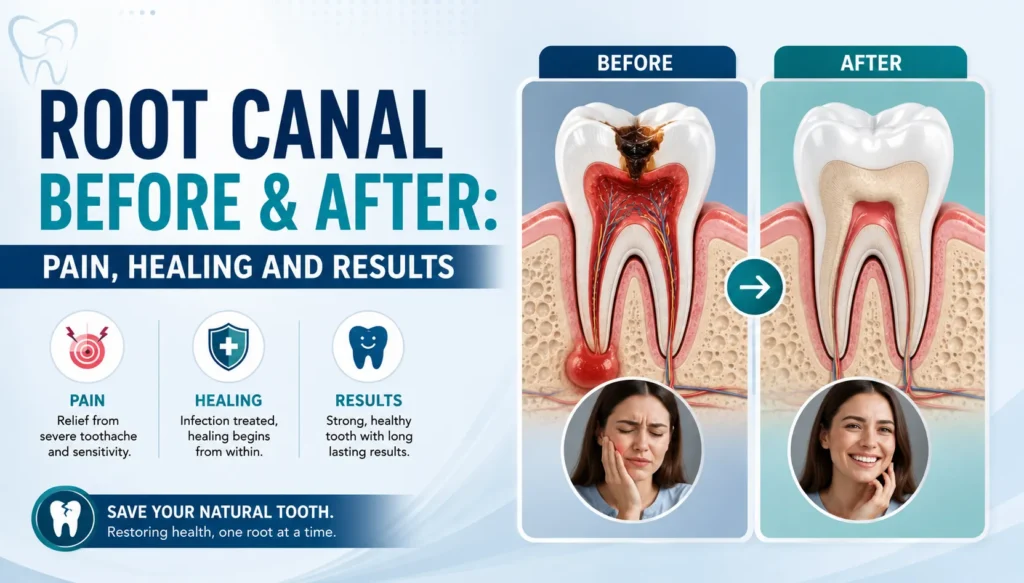
Root Canal Before Treatment: What Does Your Tooth Feel Like?
Before treatment, symptoms can vary considerably.
Some people experience intense, throbbing pain, while others have surprisingly few symptoms despite having an infection.
Common warning signs include:
Persistent Toothache
Pain that doesn’t go away or keeps returning can indicate inflammation or infection inside the tooth.
Sensitivity to Hot or Cold
If sensitivity lingers after the hot or cold stimulus is removed, it may indicate pulpal inflammation.
Pain While Biting
Discomfort when chewing or biting down can occur when inflammation has affected the tissues around the tooth.
Swelling
Swelling around the gums or face may indicate an infection or dental abscess.
Darkening of the Tooth
A tooth that becomes noticeably darker after trauma may require evaluation for possible pulp damage.
Gum Boil or Pus
A small pimple-like swelling on the gum can sometimes indicate drainage from an infected tooth.
Not everyone experiences all these symptoms. That’s why dental examination and appropriate imaging are important before deciding whether root canal treatment is necessary.
Does a Root Canal Hurt?
This is probably the biggest question patients have.
Modern root canal treatment should not be painful during the procedure in most cases.
Local anesthesia is used to numb the affected tooth and surrounding area. The dentist then accesses the inside of the tooth, removes the infected tissue, cleans the canals, and seals them.
You may feel pressure or vibration during certain steps, but significant pain should be addressed immediately by the dental team.
In fact, many patients experience substantial relief because the infected tissue responsible for the pain has been removed.
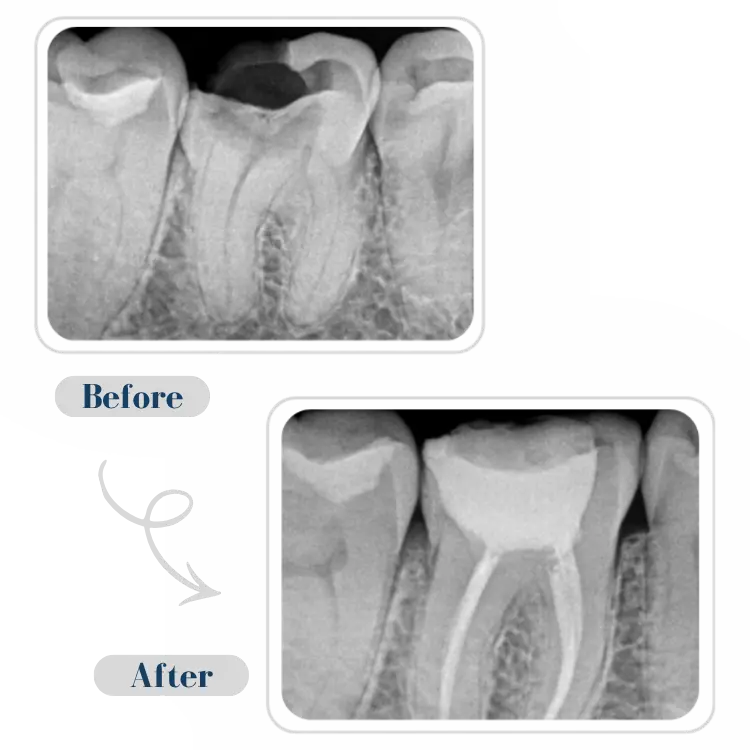
Root Canal Before & After: What Changes?
The most noticeable difference for many patients is the change in pain and function.
Before Root Canal
You may experience:
- Persistent toothache
- Sensitivity
- Pain while chewing
- Swelling
- Difficulty eating
- Sleep disturbance
After Root Canal
Once the tooth has healed and been properly restored, patients can generally expect:
- Relief from infection-related pain
- Improved chewing ability
- Reduced sensitivity caused by the infected pulp
- Preservation of the natural tooth
- Improved overall oral function
The tooth may look similar to how it appeared before treatment, particularly when it is restored with a tooth-colored filling or crown.
What Happens Immediately After a Root Canal?
It is normal for the treated area to feel slightly different after the procedure.
You may experience:
- Mild tenderness
- Sensitivity when biting
- Minor gum soreness
- A feeling that the tooth is slightly different
This can happen because the tissues around the root may remain irritated after the infection and treatment. The discomfort is generally temporary.
Your dentist may provide specific instructions depending on your case. Follow those instructions carefully rather than self-medicating unnecessarily.
Root Canal Healing Timeline
Every patient heals differently, but the general recovery may look like this:
First 24 Hours
Mild soreness or tenderness may occur. Avoid chewing hard foods on the treated tooth until your dentist advises otherwise.
First Few Days
Tenderness should gradually improve. Continue maintaining good oral hygiene while being gentle around the treated area.
First Week
Most patients can return to their normal routine. If a permanent restoration is still pending, avoid putting excessive pressure on the treated tooth.
Following Weeks
The tooth continues to settle, while the surrounding tissues recover.
If your dentist has recommended a crown, completing the final restoration is an important part of protecting the tooth.
Can I Eat After a Root Canal?
Yes, but you should be careful immediately after treatment.
If your mouth is still numb, wait until the anesthesia wears off before eating to avoid accidentally biting your cheek, tongue, or lip.
Once sensation has returned:
- Choose softer foods if the tooth feels tender.
- Avoid extremely hard or sticky foods.
- Chew on the opposite side if advised.
- Don’t put excessive pressure on a tooth waiting for its final crown.
Your dentist may give additional instructions based on the type of restoration placed.
Did You Know? The chances of successfully saving a knocked-out permanent tooth are generally highest when treatment begins within the first hour after the injury.
Do You Need a Crown After a Root Canal?
Not every root canal-treated tooth automatically requires a crown, but many back teeth benefit from one. Root canal treatment removes infected pulp but does not automatically restore lost tooth structure. A tooth that has significant structural damage may be more vulnerable to fracture.
A crown can provide additional protection and restore chewing function.
Whether you need one depends on factors such as:
- Location of the tooth
- Amount of remaining tooth structure
- Existing cracks or restorations
- Functional demands on the tooth
- Your dentist’s assessment
This is why the treatment should be viewed as a complete process rather than simply “getting a root canal.”
Timelines are approximate and vary based on individual treatment plans and clinical needs.
How Long Does Root Canal Treatment Take?
Many patients ask How long does root canal treatment take? the Answer is The treatment duration depends on the tooth and complexity of the infection.
A relatively straightforward case may be completed in one appointment, while complicated infections may require additional visits.
Factors that can affect treatment time include:
- Number of root canals
- Tooth anatomy
- Severity of infection
- Presence of previous root canal treatment
- Need for additional procedures
According to The American Association of Endodontists emphasizes preserving natural teeth whenever possible and recognizes root canal treatment as an established way to save teeth affected by pulpal or periapical disease.
Reference:
https://www.aacd.com/
Is It Normal to Have Pain After a Root Canal?
Some tenderness after treatment can be normal, particularly if the tooth was significantly infected before treatment.
However, severe, worsening, or persistent pain should not simply be ignored.
Contact your dentist if you experience:
- Increasing pain rather than improvement
- Significant swelling
- Fever
- Difficulty swallowing
- Difficulty breathing
- A bite that feels unusually high
- Persistent severe sensitivity
Proper evaluation can determine whether further treatment is needed.
What If the Tooth Still Hurts After a Root Canal?
A treated tooth can occasionally remain symptomatic.
Possible reasons include:
- Persistent infection
- Complex or missed canal anatomy
- New decay
- Leakage around the restoration
- Tooth fracture
- Problems with surrounding tissues
This does not automatically mean that the root canal has failed. Dentist may recommend additional examination and imaging to identify the cause. In selected cases, retreatment or an endodontic surgical procedure may be considered.
How Can You Take Care of Tooth After a Root Canal?
Taking care of a root canal-treated tooth is similar to caring for your other teeth.
Maintain:
- Twice-daily brushing
- Daily flossing
- Regular dental check-ups
- Professional cleaning when recommended
- A balanced diet
- Timely treatment of new dental problems
If a crown has been placed, maintaining good gum health around it is equally important. Regular visits to a trusted Dental clinic in Bandra West can help identify problems before they become more serious.
Root Canal vs Tooth Extraction: Which Is Better?
If you have confused between Root Canal Vs Tooth Extraction then if the tooth can be predictably restored, preserving it with root canal treatment is generally preferred over extraction. Keeping your natural tooth can help maintain normal chewing function and avoid the need for tooth replacement.
If a tooth is severely fractured, has insufficient remaining structure, or has a very poor prognosis, extraction may be necessary.
The decision should therefore be based on the long-term prognosis of the tooth, rather than simply choosing the cheaper or quicker procedure. An experienced Dentist can evaluate the tooth and explain the available options.
Expert Insights
According to Dr. Sailee Kalyankar, Cosmetic & Restorative Dentist at Symphony Dental Care, Bandra West, a repeatedly failing filling should prompt a closer examination of the tooth rather than an automatic decision to place another filling.

Dr. Sailee Kalyankar
BDS, MDS | Conservative Dentist and Microscopic Endodontist. Khar West | Bandra West.
Registration Number A- 35825
Why Choose Symphony Dental Care for Root Canal Treatment?
At Symphony Dental Care, root canal treatment is approached with an emphasis on accurate diagnosis, patient comfort, and preservation of natural teeth whenever possible.
The treatment plan is based on the condition of the tooth, surrounding tissues, and long-term restorative needs. From diagnosis and treatment to restoration and follow-up, patients receive guidance throughout the process.
If you’re experiencing persistent tooth pain or have been advised to undergo root canal treatment, visiting a trusted Root Canal Specialist can help you understand your options before the problem progresses.
Frequently Asked Questions (FAQs)
Before a root canal, you may experience toothache, prolonged sensitivity, pain while chewing, swelling, or other signs of infection. Some patients may have very few symptoms, so a dental examination is important.
Root canal treatment is performed under local anesthesia, so significant pain during the procedure is generally not expected. Some pressure or mild discomfort may be felt.
Mild tenderness can occur for a few days after treatment. If pain becomes severe, continues to worsen, or is accompanied by swelling or fever, contact your dentist.
You can generally eat after the numbness has worn off, but it is advisable to avoid hard or sticky foods and excessive pressure on the treated tooth until it has been fully restored.
Many patients experience improvement within a few days, although the tissues surrounding the tooth may take longer to fully settle. Your dentist can assess healing during follow-up visits.
The tooth itself may look similar after treatment. If significant discoloration or structural damage is present, a suitable restoration may improve both its appearance and strength.
A crown is frequently recommended for root canal-treated back teeth because they may have significant structural loss and are exposed to substantial chewing forces. The need depends on the individual tooth.
A properly treated and restored tooth can function for many years and potentially a lifetime. Long-term success depends on factors such as the quality of treatment, restoration, oral hygiene, and overall dental health.
Contact your dentist for an evaluation. Persistent symptoms may have several causes, including continuing infection, a complex canal, leakage, new decay, or a fracture.
If a tooth can be predictably restored, root canal treatment is generally preferred because it preserves the natural tooth. Extraction may be appropriate when the tooth cannot be restored or has a poor long-term prognosis.
Conclusion
A root canal doesn’t have to be something you fear. For an infected or severely inflamed tooth, treatment can be the step that stops the pain, controls infection, and saves your natural tooth.
The “before” stage may involve pain, sensitivity, swelling, or difficulty eating. The “after” stage is about healing, restoring the tooth, and returning to normal function.
The most important thing is not to delay treatment when symptoms appear. The earlier a damaged or infected tooth is evaluated, the more options you may have for preserving it.
If you’re experiencing persistent tooth pain, sensitivity, swelling, or pain while chewing, schedule an examination with a qualified dental professional rather than waiting for the symptoms to disappear.
Thinking About Root Canal or Extraction?