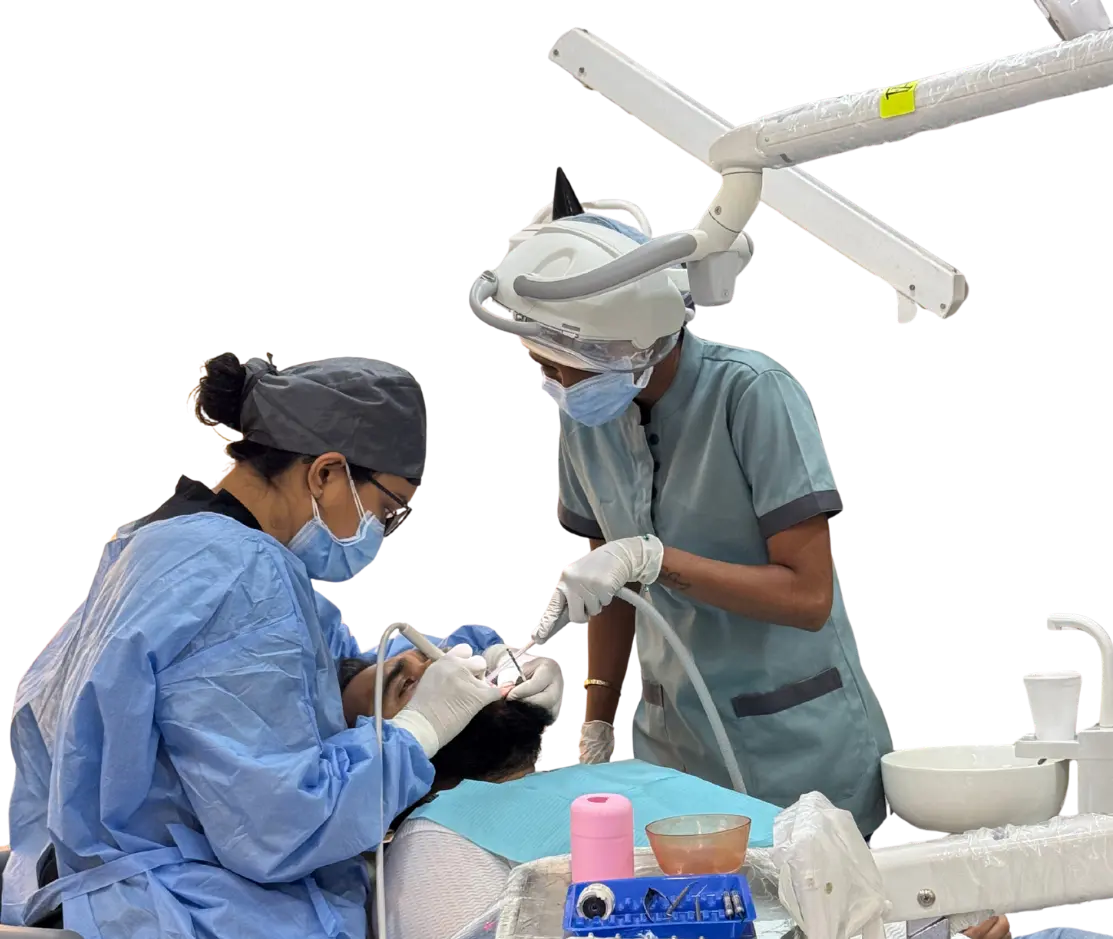

Root Canal Treatment Cost in Mumbai (2026): What Decides the Price

Written and reviewed by Dr. Sailee Kalyankar
Last updated: November 2, 2026
Table of Contents
How Much Does Root Canal Treatment Cost in Mumbai (2026)?
Root canal treatment in Mumbai costs ₹3,000 to ₹15,000 per tooth in 2026. That figure covers the root canal alone. The crown that protects the tooth afterwards is a separate procedure, done at separate appointments and priced separately, at ₹4,000 to ₹25,000 depending on the type of crown. We therefore never quote the two as a single price, and this guide keeps them apart too.
Within the root canal range, your own cost depends on the case in front of the dentist: how much infection the tooth carries, what caused the problem, the type of tooth, your age, your overall health, and how easily the tooth can be reached and seen. Some teeth also need extra materials or procedures alongside the root canal, and those are explained below.
At a glance
- Root canal treatment: ₹3,000 to ₹15,000 per tooth
- Crown (a separate procedure with separate appointments): ₹4,000 to ₹25,000
- Time: one to three sittings, depending on the infection
- What decides the cost: the amount of infection, the cause, the type of tooth, your age, your medical health, accessibility and visibility, and any extras
Written by Dr. Sailee Kalyankar, head dentist and endodontist (MDS, Conservative Dentistry and Endodontics), who leads the team of specialists at Symphony Dental Care in Khar West, just around the corner from Bandra. Read on to see what sets the price, how treatment is done step by step, what the fee includes, why a crown matters, and why saving a tooth usually costs less than losing it.
What Decides the Cost of a Root Canal?
Every tooth and every patient is different, so the same treatment can cost differently from one person to the next. These are the parameters your dentist looks at after an examination and an X-ray.
| Parameter | What the dentist looks at | How it can affect the cost |
|---|---|---|
| Amount of infection | Mild inflammation, or a larger infection with swelling or pus | More infection can mean more visits, medication between visits and more time |
| Cause of the root canal | A deep cavity, a crack, an injury, or an earlier treatment that failed | The cause decides how much of the tooth is affected and how treatment is planned |
| Type of tooth | The structure of the tooth, seen on examination and X-ray | Each tooth has its own structure, and the plan and time needed follow from it |
| Your age | How developed or settled the tooth is | Teeth change with age, so the approach and time needed can differ |
| Your medical health | Conditions and medicines that affect healing, such as diabetes or heart conditions | May need extra precautions and closer planning |
| Accessibility and visibility | How easily the dentist can reach and see inside the tooth | Harder access calls for more time, magnification and special instruments |
| Extras needed with the root canal | MTA or Biodentine, medicated dressings between visits, a post for strength | Charged separately, only when your tooth needs them |
An accurate estimate is possible only after the dentist has examined your tooth, so always ask for a clear treatment estimate before you begin.
What Does the Root Canal Price Include, and What Is Extra?
What is included. The root canal fee covers treatment from your first appointment to your last, including the filling of the canals. Depending on the infection and the other parameters above, this may be a single sitting, or it may take two or three sittings.
What is charged extra, when your tooth needs it:
- Post and core. When the tooth is badly broken down, a post is placed inside it to give it more strength.
- Extra medication sittings. When an infection needs several sittings of medication for the swelling or pus discharge to settle and the tooth to become dry.
- Permanent medication materials. Materials such as MTA or Biodentine, placed inside the tooth when it needs them.
- Diagnostics. For complex cases we may ask you to get a CBCT scan, which is a 3D scan, before treatment or at some point during it.
- The crown or cap. A crown needs to be placed after a root canal. It is a separate procedure with separate appointments, explained below.
Your dentist will tell you which of these apply to your tooth before treatment begins.
Signs You May Need a Root Canal, and Why Waiting Costs More
Common signs that the pulp of a tooth is inflamed or infected include:
- A toothache that lingers or wakes you at night
- Sensitivity to hot or cold that stays after the drink is gone
- Pain when you chew or press on the tooth
- Swelling of the gum or face, or a pimple like bump on the gum
- A tooth that has darkened, or a bad taste in the mouth
Sometimes there is no pain at all and the problem is found on an X-ray. Waiting also affects cost. An infection that is left to grow usually needs more sittings, more medication and sometimes extras such as a post, all of which add to the cost. Treating early usually keeps treatment simpler and shorter, and gives the best chance of saving your tooth.
How Is a Root Canal Done? Step by Step
A Routine Root Canal (One to Two Sittings)
Every root canal follows the same principle: remove the infection, clean and disinfect the canals, and seal them so that bacteria cannot return. For a tooth with mild to moderate inflammation or infection, treatment usually goes like this:
- Examination and digital X-ray. The dentist checks the tooth, confirms the diagnosis and studies the shape of the canals.
- Local anaesthesia. A numbing gel is applied first, followed by a local anaesthetic, so you are comfortable throughout.
- Isolation. The tooth is isolated to keep it clean and dry during treatment.
- Access. A small opening is made in the top of the tooth to reach the pulp chamber.
- Removal of the infected pulp. The inflamed or infected pulp tissue is taken out.
- Measuring, cleaning and shaping the canals. The length of each canal is measured with an electronic apex locator and confirmed on X-ray. The canals are then cleaned and shaped with rotary files, using magnification where needed.
- Disinfection. The canals are irrigated with disinfecting solutions, with ultrasonic activation, to remove bacteria from areas that instruments cannot reach.
- Filling the canals. Once dry and clean, the canals are sealed with a biocompatible filling material.
- Sealing the tooth. The tooth is closed with a filling or core build up, and a final X-ray checks the result.
- Crown. A crown is planned and placed at a separate appointment.
An Infected Tooth With Swelling or Pus (Several Sittings and Medication Changes)
When a tooth has an abscess, swelling or pus discharge, the infection has to be brought under control before the canals can be filled. This takes more than one sitting:
- Diagnosis. Examination and digital X-ray to see how far the infection has spread. A CBCT scan may be advised in complex cases.
- First sitting: access and drainage. After anaesthesia, the tooth is opened so the infection can drain, and the infected tissue is removed.
- Cleaning and disinfection. The canals are cleaned, shaped and disinfected as far as the first visit allows.
- Medication placed. An antibacterial medicament, commonly calcium hydroxide, is placed inside the canals and the tooth is sealed with a temporary filling. If swelling is spreading, additional medicines may be prescribed.
- Review and change of medication. At the next visit, usually after about a week or as the dentist decides, the medicine is removed, the canals are cleaned again and fresh medication is placed if swelling, pus or discomfort remains. This is repeated until the tooth is comfortable, free of swelling and pus, and the canals are dry.
- Filling the canals. When the tooth is ready, the canals are sealed. Materials such as MTA or Biodentine are used where the tooth needs them.
- Strengthening the tooth. A core build up, or a post if the tooth is badly broken down, restores strength.
- Crown. A crown is placed at a separate appointment.
How many medication visits are needed depends on how the tooth responds. This is one reason the same procedure can cost differently from one patient to another.
More Factors That Affect Root Canal Cost in Mumbai
Severity of Infection
A tooth with mild pulp inflammation is often simpler to treat than one with extensive infection.
Factors that increase treatment complexity include:
- Large dental abscess
- Swelling
- Multiple infected canals
- Bone infection
- Previous untreated infection
Advanced infections may require:
- Multiple visits
- Additional medication
- Extra cleaning procedures
First Time Root Canal vs Retreatment
A first-time root canal is generally more straightforward.
However, retreatment involves removing old filling material, locating untreated canals, correcting previous procedural issues, and disinfecting the tooth again.
Retreatment is usually more time-consuming and technically demanding.
Technology Used During Treatment
Modern technology improves diagnosis, precision and comfort, and it is one of the factors behind the cost of treatment. Technology used in root canal treatment includes:
- Digital X-rays for clear images with low radiation.
- CBCT scans, when clinically indicated, for a 3D view of complex cases.
- Rotary endodontic systems to shape the canals smoothly and efficiently.
- Electronic apex locators to measure the length of each canal accurately.
- Magnification loupes or dental microscopes to see the fine details inside the tooth.
- Ultrasonic cleaning and irrigation to disinfect areas of the tooth that hand instruments cannot reach.
Dentist's Experience
A root canal is delicate work done inside a tooth that the dentist cannot see directly. The inside of a tooth can have fine, curved or hidden canals, and missing even one can let the infection return. Skill, judgement and years of practice show in how well the canals are found, cleaned and sealed, in how an unexpected finding is handled, and in how comfortable you stay throughout.
A dentist with postgraduate training in endodontics and years of experience may charge differently because of that expertise, more predictable treatment planning, and the ability to manage difficult cases such as retreatments, curved canals and stubborn infections. A first root canal done well is the best way to avoid a repeat treatment or losing the tooth.
At Symphony Dental Care, every root canal is carried out by an MDS specialist with at least 10 years of experience, led by endodontist Dr. Sailee Kalyankar. Choosing a dentist should involve more than comparing prices.
Single Sitting vs Multiple Sittings
Many patients ask whether a single sitting root canal is cheaper. Whether treatment can be finished in one sitting depends on the condition of the tooth, not on preference. A tooth with mild inflammation may be completed in one visit. A tooth with swelling, pus or a larger infection may need medication between visits so the infection is controlled and the tooth is dry before it is filled. Extra sittings are done for the safety and success of the treatment.
Does the Root Canal Cost Include the Dental Crown?
No. The root canal cost does not include the crown. A root canal and a crown are two different procedures, done at different appointments and charged separately. Treatment charges are usually divided into:
- Consultation
- Diagnostic X-rays
- Root canal procedure
- Post and core, if needed
- Crown
- Follow up review
Always ask for a detailed treatment estimate before beginning treatment.
Why Is a Crown Often Recommended After Root Canal Treatment?
The aim of a root canal is to preserve your natural tooth. But after the procedure the tooth becomes a little more brittle and more prone to fracture if a crown is not placed. The tooth also needs enough strength to withstand the chewing forces of everyday life. A crown, or cap, helps by:
- Protecting the remaining tooth structure
- Restoring chewing efficiency
- Sealing the tooth and reducing the risk of fracture
- Improving long term durability
The crown is placed at a separate appointment, once the tooth has settled.
According to the American Association of Endodontists (AAE), restoring a root canal-treated tooth appropriately is an important step in protecting it from future damage.
How Much Does a Crown Cost?
A crown costs between ₹4,000 and ₹25,000, and it is a separate procedure from the root canal, done at separate appointments. The cost depends on:
- The type of crown. A metal crown is very strong but not tooth coloured. A metal ceramic crown has a tooth coloured ceramic layer over a metal base. A zirconia crown is very strong and tooth coloured. An E-max crown is highly aesthetic with natural translucency and is often chosen where looks matter most.
- The dentist’s experience and skill, which matter most in crown work. An accurately fitted crown seals the tooth and protects the root canal, and the fit and the bite depend on the dentist’s skill.
- Where the crown is to be placed in the mouth.
- How much natural tooth structure remains to support it.
Your dentist decides which type of crown suits your tooth and explains why. Read more about dental crowns and bridges and post and core.
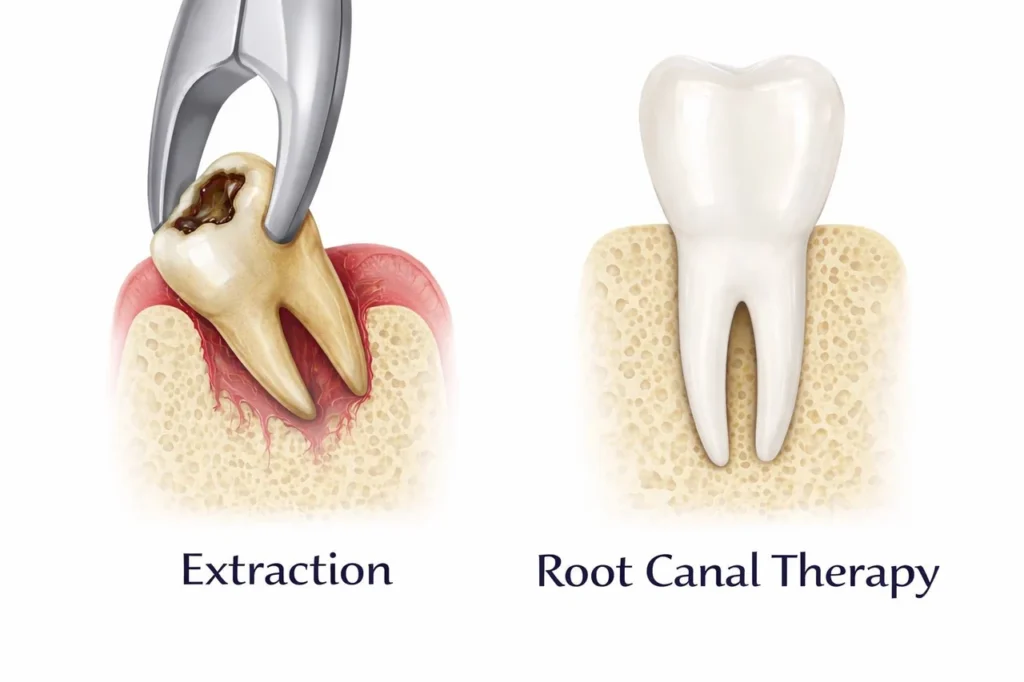
Is a Root Canal Cheaper Than Removing the Tooth?
Not on the day. Extracting a tooth costs less than a root canal. But that is only the start of the cost. A missing tooth usually has to be replaced, because a gap lets neighbouring teeth drift, changes your bite and can lead to bone loss.
- A bridge needs the teeth on either side to be shaved down, and may need replacing after some years.
- A dental implant needs surgery, healing time and a crown on top, and costs far more than a root canal and crown.
So the lower cost of an extraction is usually temporary. Saving your natural tooth with a root canal and a crown is generally the more economical choice over time, and it keeps your natural bite. When a tooth truly cannot be saved, we tell you honestly and plan the best replacement. Read our guide on tooth extraction vs root canal and about dental implants.
No. Modern root canal treatment is done with modern anaesthesia, and most patients feel only pressure, not pain. A topical numbing gel is applied first so the injection is barely felt. A modern local anaesthetic is then given slowly so that the tooth and the surrounding area are fully numb before treatment starts, and more is given if needed, even when a badly inflamed tooth is hard to numb. Most of the pain patients associate with root canals comes from the infection before treatment, which the procedure relieves.
Common Mistakes Patients Make When Comparing Root Canal Costs
- Choosing the lowest price without understanding what is included.
- Assuming every root canal procedure is the same.
- Ignoring the need for a crown after treatment.
- Delaying treatment to avoid costs, allowing the infection to worsen.
- Not asking whether additional procedures may be required.
- Comparing treatment fees without considering the dentist's expertise and technology available.
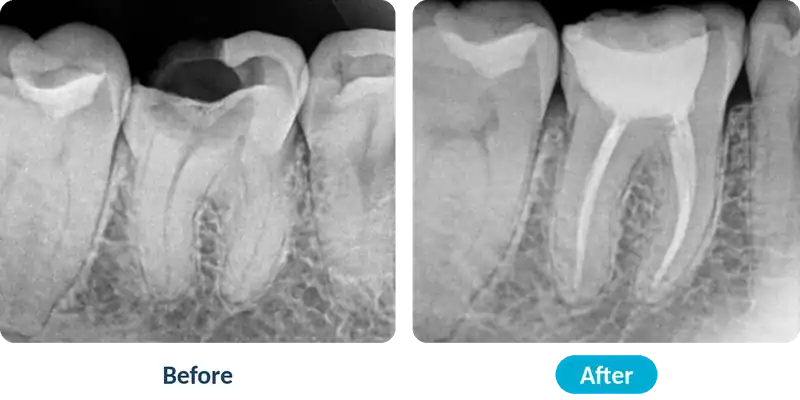
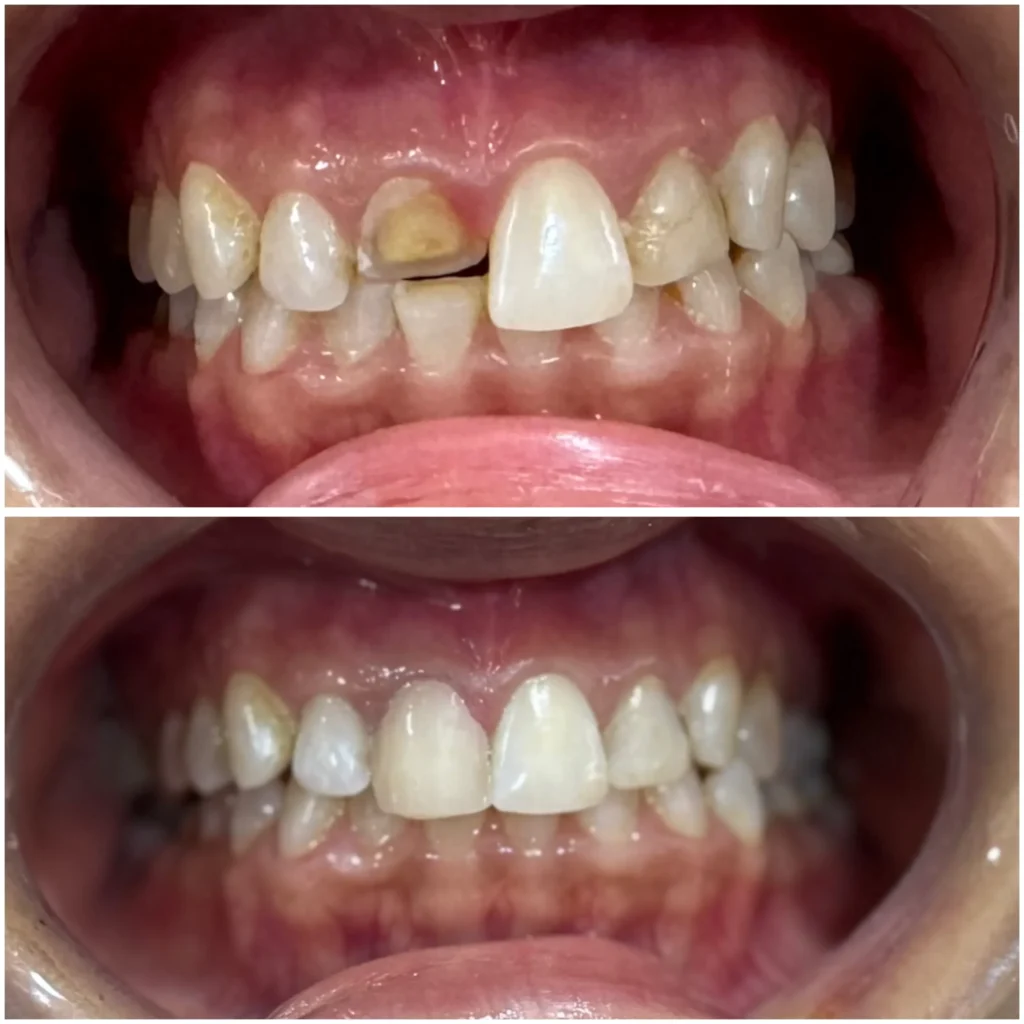
Real Root Canal Before and After X-ray
Expert Insights
Patients often compare treatment fees without considering the complexity of their individual case. The amount of infection, the cause of the problem, your medical health and the condition of the tooth all shape the treatment plan, and with it the cost. During every consultation at Symphony Dental Care, we explain why recommendations and costs vary, so patients can decide based on their oral health and not just the initial fee.

Dr. Sailee Kalyankar
BDS, MDS | Conservative Dentist and Microscopic Endodontist. Khar West | Bandra West.
Registration Number A- 35825
Why Patients Choose Symphony Dental Care for Root Canal Treatment
When patients are considering root canal treatment, they often look beyond cost—they want confidence in the quality of care they receive.
At Symphony Dental Care, Bandra West, every treatment plan begins with a comprehensive clinical assessment. Dr. Sailee Kalyankar and the dental team evaluate the condition of the affected tooth, discuss all suitable treatment options, and explain the factors that influence treatment costs.
- Digital diagnostic imaging when clinically indicated
- Personalised treatment planning
- Clear explanation of procedures and expected outcomes
- Transparent discussion of treatment fees
- Comprehensive restorative care, including dental crowns where appropriate
- Follow-up guidance to support long-term oral health
Patients from Bandra West, Khar West, Mahim, Bandra East, Santacruz, Vile Parle and nearby neighbourhoods often seek root canal treatment at Symphony Dental Care when they experience sudden tooth pain, broken teeth, or dental injuries.
Frequently Asked Questions (FAQs)
Between ₹3,000 and ₹15,000 per tooth. The exact cost depends on the amount of infection, the cause, the type of tooth, your age, your medical health, accessibility and any extras. A crown is a separate procedure and cost.
Because every tooth and every patient is different. The dentist looks at the infection, the cause, the tooth, your health and how easily the tooth can be reached before giving an estimate.
In most cases, yes. A treated tooth becomes brittle, and a crown protects it from fracture. A crown is a separate procedure with separate appointments.
A crown costs ₹4,000 to ₹25,000, depending on the type of crown (metal, metal ceramic, zirconia or E-max), the dentist’s experience and skill, where the crown is placed and how much natural tooth structure remains.
One to three sittings, depending on the infection. The crown is placed at separate appointments afterwards.
Sometimes. A tooth with mild inflammation can often be completed in one visit. A tooth with swelling, pus or a larger infection usually needs medication between visits first, so it is done in two or three sittings.
No. It is done with modern anaesthesia, and the procedure relieves the pain caused by the infection.
Not on the day, because an extraction costs less. But a missing tooth usually needs a bridge or an implant, which costs far more later. Saving your natural tooth is generally the more economical choice over time.
The infection can spread, cause swelling and bone loss, and may need more sittings, more medication and extras such as a post, which adds to the cost. In some cases the tooth can no longer be saved.
Coverage depends on your policy. Some plans reimburse part of the cost, while others have waiting periods, exclusions or annual limits. Please check directly with your insurer.
Wait until the local anaesthetic has worn off before eating, to avoid biting your cheek or tongue. Soft foods are recommended at first, and chewing on the treated side should be avoided until the tooth has been permanently restored, if your dentist advises it.
With appropriate restoration and good oral hygiene, many root canal treated teeth function well for many years. Regular check ups are important for long term success.
Conclusion
Root canal treatment in Mumbai costs between ₹3,000 and ₹15,000 per tooth, and the exact amount depends on the infection, its cause, the tooth, your health and what your tooth needs. The crown that protects the tooth afterwards is a separate procedure with a separate cost of ₹4,000 to ₹25,000, depending on the type of crown. Asking for a detailed estimate after your examination, and understanding what is included, helps you decide with confidence.
If you have tooth pain or swelling, do not delay, because early treatment saves the tooth and keeps treatment simpler.
Related reading: Root Canal Treatment in Bandra West, Dental Crowns and Bridges, Why Does a Root Canal Tooth Break?, Tooth Extraction vs Root Canal, and meet Dr. Sailee Kalyankar.
Need Root Canal Specialist? We’re Here to Help